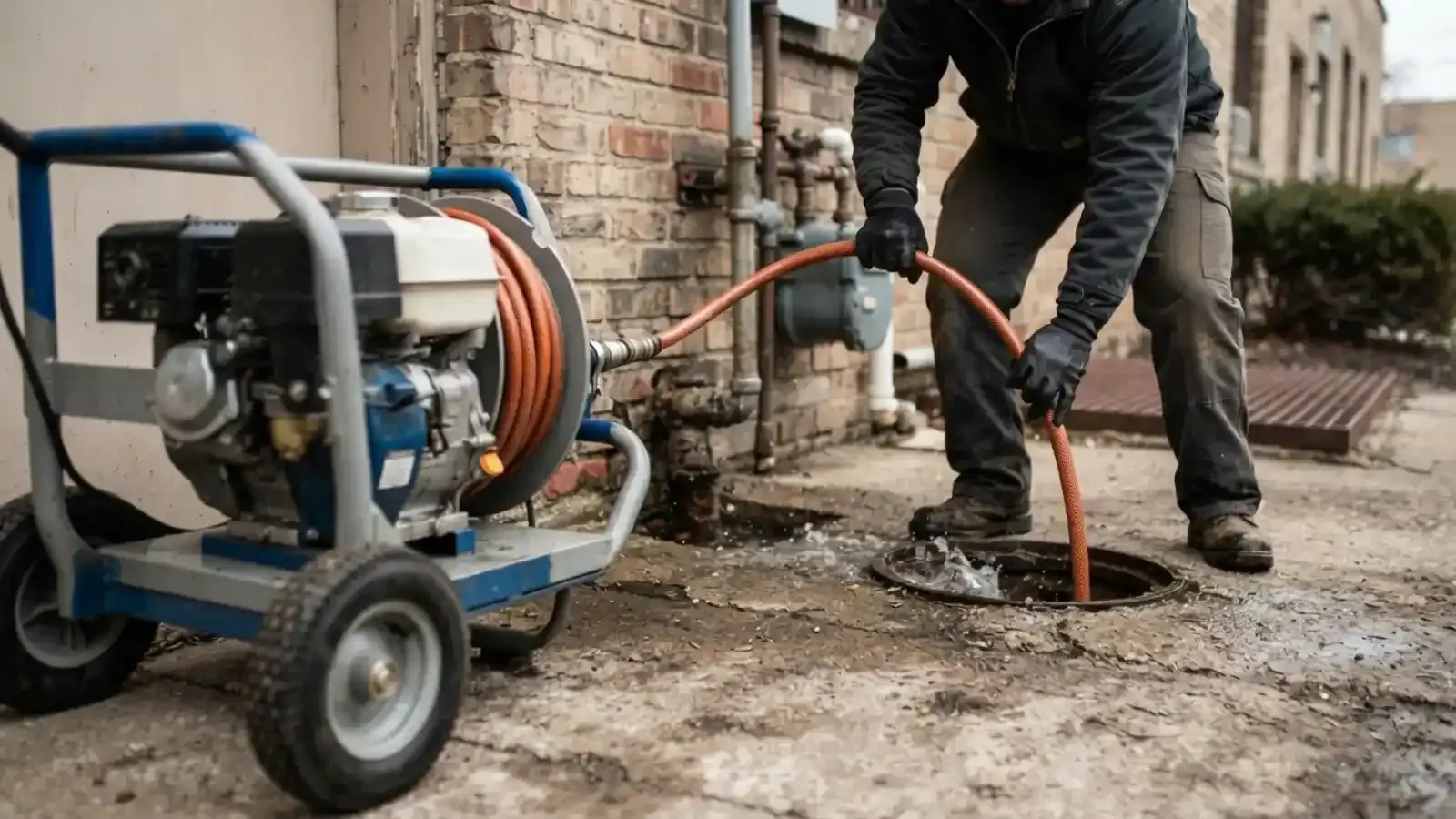
How roots get into a pipe that looks sealed
A sewer line is a sealed pipe in theory, but joints move, gaskets age and small cracks open. Wastewater vapor and trickles of moisture leak out, and fine root hairs follow the scent of water. Once a hair squeezes through, it grows into a mat that catches paper and grease.
The first sign is rarely dramatic. Several drains slow down at once, the toilet gurgles when the washer drains, and a plunger helps for a day. Because the blockage is far from the fixtures, local plunging and drain cleaners treat the symptom, not the cause.
Symptoms to watch for
Look for slow drains in more than one fixture, bubbling in the toilet when another fixture runs, and a sewage smell near the cleanout. Backups in the lowest drain, usually a tub or floor drain, are a later warning. Lawn patches that are unusually green or sunken along the line can hint at a leak.
Why some pipes are more at risk
Clay and older concrete pipe have many short sections and joints, and each joint is a place for roots to enter. PVC has fewer joints and tight seals, so root entry is less common but still happens at poor connections and breaks. Trees with thirsty, wide roots, such as willows, maples and silver poplars, are common offenders.
Cabling versus hydro jetting
Both clear a root blockage. They differ in how thoroughly they remove it and how long the line stays open.
Cabling (mechanical auger)
- A rotating cable with a cutting head bores through the clog.
- Opens a channel quickly.
- Leaves root remnants on the pipe walls.
- Roots usually return sooner.
- Lower equipment demand, so it often fits a first call.
Hydro jetting (water jet)
- High-pressure water scours the pipe walls.
- Removes roots, grease and scale together.
- Leaves a cleaner bore so regrowth takes longer.
- Best after a camera confirms the pipe is sound.
- Not suitable for a badly cracked or collapsed pipe.
Our pages on hydro jetting and sewer line cleaning explain what each visit includes.
What a root-clearing visit looks like
The plumber locates the cleanout, usually a capped pipe near the house or in the yard, and runs a cutter head through the line until it moves freely. A camera then goes in to show where the roots entered, how much pipe is damaged, and whether the line has low spots that hold water.
You get to see the footage. That matters because it turns a vague estimate into a clear choice: keep cleaning on a schedule, repair one spot, or line the run. A licensed plumber gives you the price before work starts, so you decide with the picture in front of you.
Ask for the entry point to be marked on the yard if a repair is needed. A marked spot shows how far from the house the break is, which affects how much digging the repair involves. Plumbing codes generally require cleanouts at set points along a drain, so according to those standards a line with no accessible cleanout may need one added before cabling.
Which fix fits which condition
A camera inspection decides this. Here is how the options line up.
| Condition found | Option | Trade-off |
|---|---|---|
| Roots in a sound pipe | Cabling or jetting | Cleans it, but roots can return |
| One cracked or offset spot | Spot repair | Digs one section, fixes the entry point |
| Several joints leaking | Pipe lining | Seals the full run without a trench, smaller bore |
| Collapsed or bellied pipe | Section replacement | Most digging, ends the root entry |
| Roots from a small tree | Cut roots and repair | Removes the cause |
A sewer camera inspection shows which row you are in before anyone digs.
Jenks, Oklahoma: ask which side is whose
The City of Jenks says Public Works maintains the city's sewer, storm drain and water systems. Because the line from your house to the main may cross your yard and beyond, call Jenks Public Works at 918-299-5883 and ask which section is the homeowner's and which is the city's before you pay for a dig. We do not state the rule here because it is best confirmed with the city for your address.
Census data shows most Jenks homes are newer, with a median build year of 2006. In those neighborhoods, young trees may not have reached the sewer line yet, but roots grow for decades and a tree planted near the line today can reach it later. Mature trees around the older pockets near downtown are the first places to check.
Do root killer chemicals work?
Foaming root killers can burn back the roots inside the pipe, but they do not fix the opening where the roots entered. Used alone, they delay the problem rather than end it. Some products are harsh on septic systems and should not go down a toilet if you have one, so read the label.
A chemical treatment fits only after the line has been cleared and a camera confirms the pipe is intact. If the pipe is cracked, the real fix is a sewer line repair at the damaged spot. The order is the same for homes in Sapulpa and Glenpool: clear it, camera it, then decide.
How to keep roots out
- Know where the line runs. Find the cleanout and mark the path before planting anything.
- Plant smart. Keep thirsty trees such as willow, maple and poplar well away from the line.
- Schedule a camera check. If you have had one root backup, a yearly look shows regrowth early.
- Don't flush wipes or pour grease. Debris catches on root hairs and makes a blockage faster.
- Fix small leaks promptly. A tight joint gives roots nothing to follow.
Questions about roots in sewer lines
Yes, mostly by widening existing cracks and joints. They rarely break sound pipe, but a long-neglected blockage can crack or offset a weak section.
It depends on the pipe and the tree. Some lines need a cleaning every year or two until the entry point is repaired, so a camera view tells you the real interval.
The owner of that section of line pays. Ask Jenks Public Works at 918-299-5883 which section is yours, and check your homeowners policy, since policies differ.
Cutting a tree removes the source, but old roots stay in the pipe until they are cleared. Cut roots can also resprout, so clear the line and repair the entry point.
No. Newer PVC lines often stay clear for years. A cleanout inspection or a camera pass gives you a straight answer.
Repeat backups? Call and a licensed plumber can camera the line. Call (855) 575-2890