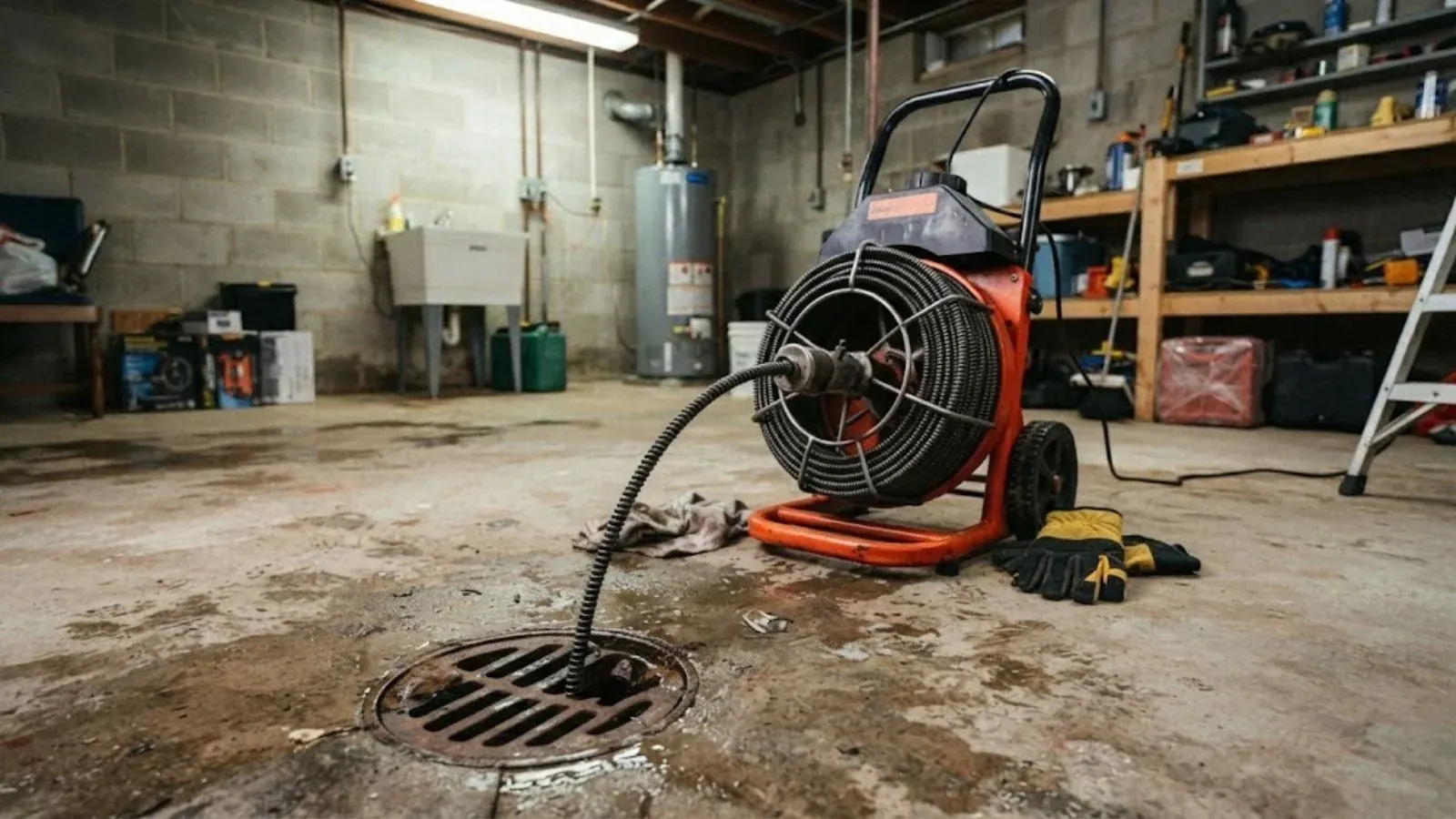
What actually clears a clogged drain
A clog is a mass of grease, hair, paper, soap scum or foreign objects sitting in the pipe and slowing or stopping flow. Clearing it means either breaking the mass apart or pulling it out, depending on what it is made of.
A plumber matches the tool to the blockage. A hand auger or drum machine with a cutting head handles most household clogs. A jetter washes out grease and scale that a cable only punches a hole through.
The goal is a full-diameter pipe, not just a small channel that drains for a week. That is why a good visit ends with a flow test, running water until the line stays clear. Jenks has adopted the 2018 International Plumbing Code (IPC), which requires traps and vents on fixture drains, so a drain that gurgles after clearing may need a vent check instead of another cable run.
Signs the clog is more than a plunger can fix
These symptoms point to a blockage deeper than the trap under one fixture.
- Gurgling pipes. Air pulled past a partial blockage makes the toilet or tub bubble when another fixture drains.
- Water rising in a second fixture. A shower filling when the washer drains means the shared branch line is restricted.
- Slow drains in more than one room. Several fixtures slowing together usually means one blockage downstream of all of them.
- A clog that returns within weeks. Fast regrowth means grease or roots are still lining the pipe, not just one lump of debris.
- Foul smell from a floor drain. Standing water with debris in it often sits behind a blockage that has stopped flow.
Which drain, which tool
The fixture and the pipe size decide the method. This is what a plumber typically reaches for.
| Drain | Typical tool | Usual cause |
|---|---|---|
| Bathroom sink | Hand auger or small cable | Hair, toothpaste, soap film |
| Kitchen sink | Drum machine, small cutter head | Grease, food scraps |
| Shower or tub | Drain snake, sometimes pulled stopper | Hair mats, soap |
| Washing machine standpipe | Cable, sometimes a jetter | Lint, detergent residue |
| Floor drain | Cable through the trap | Silt, debris, dry trap |
| Branch line to main | Larger cable or jetter | Grease, wipes, roots |
A repeat clog in the same spot is a reason to look with a camera, not to cable it a third time.
Kitchen sink clogged or backing up
Kitchen drains clog faster than any other fixture because cooking grease cools and sticks to the pipe wall. Soap and food scraps pile onto that layer until the opening is the size of a pencil. Garbage disposals grind food small but do not stop the grease that rides along with it.
If water backs up into the second basin, the blockage is past the sink trap, usually in the horizontal run behind the cabinet or in the wall. A plumber removes the trap first, then feeds a cable through the wall stub to the blockage and cuts it out.
If the sink drains slowly after you run the disposal, the line may be clear and the problem may be the unit. Our garbage disposal repair page covers jams, clogged baffles and failing motors. Baking soda and vinegar do very little against a grease clog, and chemical openers can sit in a standing sink and burn skin or fixtures.
What a drain cleaning visit looks like
The sequence is the same whether the call comes at noon or after midnight.
Find where it stops
The plumber runs water at several fixtures to learn whether the blockage is at one trap, on a branch line or at the main.
Quote before work
You get a clear price before work starts, based on access, the length of cable needed and whether a jetter is warranted.
Clear the line
A cable with a cutting head is fed in until the blockage is felt, then worked through until resistance drops and the pipe is open.
Test the flow
The plumber runs water for several minutes, checks the other fixtures on the line and cleans up the cable debris.
Camera if it keeps coming back
When cabling only buys a short fix, a camera shows whether roots, a bellied pipe or a crack is behind it.
Showers, tubs and the drain line itself
A shower or tub that drains slowly is nearly always hair and soap wrapped around the stopper or caught in the first elbow. Lift the strainer and pull what you can reach before calling. If standing water remains, a short snake through the overflow or drain usually opens it.
A drain line leak is different. If a ceiling stain, a damp cabinet floor or a wet slab appears around a drain pipe, the water is escaping rather than blocking. Cable work will not fix that, and a plumber will likely recommend leak detection to pinpoint the break.
What to do before the plumber arrives
A few minutes of prep makes a late-night visit faster and keeps water damage down.
Stop adding water
Do not flush, run the washer or use the dishwasher. Every gallon has to go somewhere, and it may come up in the lowest drain.
Clear the access
Empty the cabinet under the sink and move rugs and boxes away from a floor drain or cleanout.
Protect the floor
Put towels or a bucket where water might spill, and lift anything valuable off a basement or garage floor.
Skip the chemicals
Do not pour drain opener in. The plumber needs to know what is in the pipe, and some products are hazardous to handle.
What drain cleaning costs and why it varies
Price depends on the job, not the fixture name. Call and describe the symptom, and we give you a price before work starts.
Homeowners policies usually do not pay to clear a clog, but they may help with water damage from a sudden backup. Policies differ, so read yours.
Cabling versus hydro jetting
Both clear drains, and the right choice depends on what lines the pipe.
Cable or snake
- Fast on hair, paper and soft blockages
- Works well on sinks, tubs and short runs
- Leaves a hole through grease, not a clean wall
- Lower setup effort, usually the first step
Hydro jetting
- Scours grease, scale and silt off the pipe wall
- Best for repeat clogs and larger lines
- Needs a sound pipe, so camera first if unsure
- Covered on our hydro jetting page
If a drain clogs again within a month of snaking, move up to jetting rather than paying for another cable run.
Drain questions from Jenks homeowners
Yes. The line is open 24/7, and a plumber can come the same day or after hours when a drain is backing into the house. Call, describe where the water is coming up, and shut off water use while you wait.
No. Chemical openers often fail on a full blockage and leave caustic liquid sitting in the pipe. That is hazardous for the plumber and can damage older fixtures.
Check other fixtures. If only one sink is slow, the clog is local. If a tub gurgles or a toilet bubbles when you drain the sink, the blockage is on a shared branch or the main line.
Main line clogs are handled as sewer line work, usually from a cleanout. Ask on the call and we will route it. The details are on sewer line cleaning.
Some outdoor drain jobs are possible and some are not, depending on the system. Ask on the call. Removing a stuck drain grate is a quick question to ask the same way.
A cable opens a path but leaves grease and scale on the pipe wall, which then catches debris again. A camera and a jetter address the cause, and the first step is described on our page for hydro jetting.
Yes. We serve Jenks, Glenpool, Bixby, Sapulpa and Kiefer. The Bixby page lists what the line covers there.
Water backing up now? Call the line and tell us which fixture. Call (855) 575-2890