Drains that keep clogging after snaking
A cable punches a hole through a blockage and pulls some of it out. The grease and scale stuck to the pipe wall stay behind, so the hole narrows again and the drain slows within weeks.
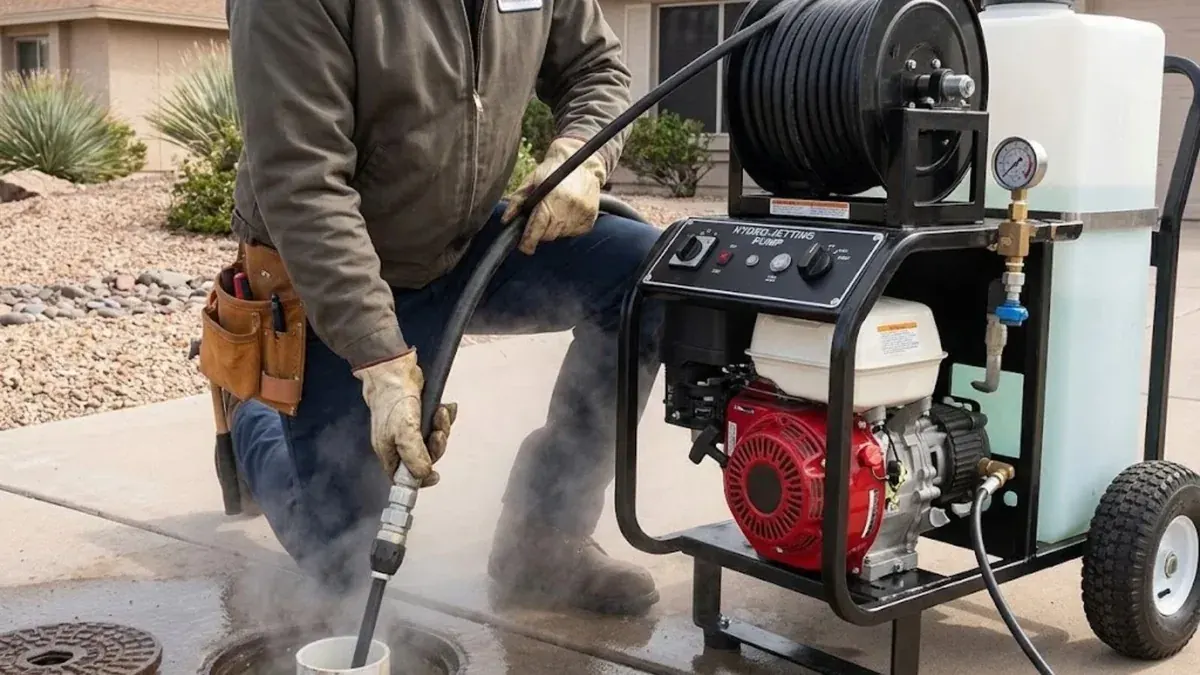
Hydro jetting washes that layer off instead of piercing it. A nozzle with rear-facing jets pulls itself down the pipe while forward and side jets cut the buildup loose and flush it downstream.
How a jetting visit runs
The order matters, because jetting sends a lot of water at high pressure into the line.
Locate access and confirm the pipe
The plumber finds a cleanout or pulls a fixture to get into the line, and asks what pipe material you have and how old the section is.
Camera first when in doubt
A small camera on a cable shows the grease layer, root mass, offset joint or crack before any pressure goes in.
Thread the jet hose
The hose and nozzle are fed in and the pressure is raised slowly, matched to the pipe size and material.
Work the line in passes
The nozzle is drawn back and forth through the problem stretch until the wall is clean and the debris has flushed to the main.
Camera again and a flow test
A second look shows what is left, then water is run through the fixtures to confirm the line drains freely.
Jetting or something else
The cause of the clog decides whether jetting fits.
| Cause | Jetting fit | Note |
|---|---|---|
| Grease and soap film | Strong | Scours the wall that a cable only pierces |
| Fine tree roots | Good | Cuts and flushes, but roots regrow without repair |
| Heavy roots in a joint | Partial | Cable cutter first, jet to clean up |
| Silt and scale | Strong | Washed away along the run |
| Collapsed or cracked pipe | Wrong tool | Needs sewer line repair |
| Fragile old clay or Orangeburg | Risky | Camera and judgment before any pressure |
Jetting cleans a pipe. It does not repair a pipe that is broken.
When jetting is the wrong call
High-pressure water will find any weak spot. A collapsed section, a crack or a badly offset joint can be made worse, and soil can wash into the gap. Orangeburg, a tar-paper pipe used in some mid-century lines, and very worn clay can be too fragile for the pressure.
Census data shows about 16% of Jenks homes were built before 1980, so most lines here are newer plastic, but the older pockets near downtown may have clay or cast iron. That is the reason a camera comes first when the pipe material is unknown. If the camera shows damage, the plumber will say so and quote a repair instead of jetting through it.
Roots are the other caveat. Jetting can clear them out of a joint, but they come back until the crack that let them in is sealed. See sewer camera inspection for how the camera finds the entry point. Plumbing codes generally call for cleanouts on drain lines, and Jenks adopted the 2018 International Plumbing Code (IPC), so locate your cleanout before the visit because a jetter usually enters there.
What to do when a line is backing up and cannot wait
A backed-up line is urgent. These steps keep the damage small until a plumber can come, including after hours.
Stop sending water down
Hold off on showers, the washer and flushes. Water has nowhere to go and will rise at the lowest drain.
Find the cleanout
Look for a capped pipe near the house or in the yard, and clear the area so the plumber can reach it.
Note the history
Write down when it last clogged and whether it was cabled. That tells the plumber whether jetting is the sensible next step.
Move belongings
Lift items off the floor in a basement, laundry room or garage in case the line backs up before the visit.
What affects the cost of jetting
Jetting is priced to the line, not to a flat menu. Describe the symptom on the 24/7 line and you get a price before work starts.
Insurance seldom pays to clean a line, though a sudden backup that damages floors may be covered. Policies differ, so read yours.
When a repeat clog points to jetting
If more than one of these fits your home, ask for jetting on the call.
- Back to slow within a month. A cable cleared it, and the drain slid back to slow quickly.
- Greasy kitchen line. Kitchen waste goes to a long horizontal run that holds cooled fat.
- Multiple fixtures slow together. The restriction is on the shared line, not one fixture.
- Smell with no visible leak. Debris coating the wall holds odor even after the line drains.
- Roots found on camera. A previous inspection showed fine roots and no broken pipe.
Hydro jetting questions in Jenks
Ask a plumber about hydro jetting, because a cable leaves the pipe wall coated. A camera first will show whether grease, roots or a damaged section is the real cause.
It is safe for sound modern pipe like PVC and for cast iron in good shape. It is the wrong tool for cracked or collapsed pipe and for very fragile old clay or Orangeburg, which is why we look first.
Yes. The line is open 24/7 and a plumber can come the same day or after hours when a line is backing up. Stop using water and call.
No. Jetting clears the roots out, but they grow back through the same crack. A repair of the cracked section is the lasting fix, and a camera finds it.
A snake cuts or pulls a blockage with a spinning cable. A jetter washes the full pipe wall with water pressure, which suits grease and scale. The first option is in our drain cleaning service.
Yes, when the camera and the pipe material support it. The Sapulpa page lists the towns we serve beyond Jenks.
Not sure jetting is right? Call and describe the clog. Call (855) 575-2890