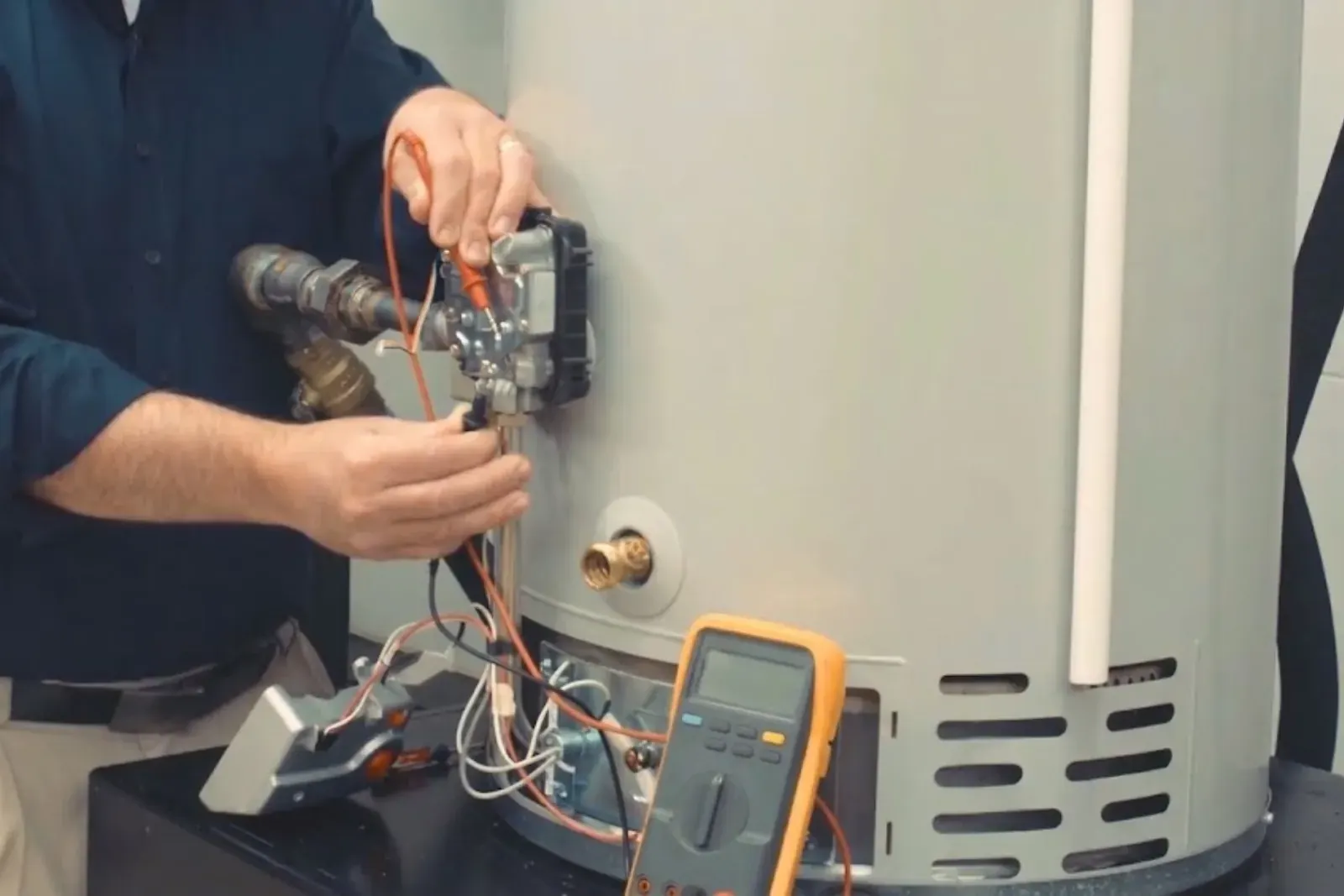
What a water heater repair actually covers
Water heater repair means finding the one part that failed in a tank or tankless unit and replacing it, so the appliance keeps working. A licensed plumber in Jenks typically deals with thermostats, heating elements, thermocouples, gas control valves, temperature and pressure relief valves, drain valves and dip tubes.
The repair is only worth doing when the tank is sound. Census ACS data puts the median Jenks home at a 2006 build, so many heaters here are original builder-grade tanks now at or past the usual ten to fifteen year mark. So the plumber checks the tank and anode rod before ordering any part.
Why a water heater stops giving hot water
For a plain no hot water call, the split is simple. A gas heater needs a pilot flame (or electronic igniter) that heats a thermocouple, which tells the gas valve it is safe to keep burning, so a weak pilot or a worn thermocouple shuts the burner off.
An electric heater needs a working upper and lower heating element and a thermostat that can pass power to them. A dead element, a tripped high-limit reset or a bad thermostat leaves you with cold water. If you smell gas at any point, leave and call the gas utility or 911 first, and do not relight anything.
Lukewarm instead of hot
On an electric tank, one dead element often gives half-warm water that runs out fast. On a gas tank, a broken dip tube sends cold supply water straight to the top.
Rumbling or popping
Sediment settles at the bottom and traps steam under the layer. Draining and flushing the tank often quiets it, if the tank is not already brittle.
Error code or flashing light
Many gas models with electronic ignition and most tankless units flash a code when the flame, vent or sensor fails. The plumber reads the code, then tests the part it points to rather than guessing.
Breaker trips or pilot keeps dying
A breaker that trips again after a reset points to a shorted element, so stop resetting it. A pilot that goes out repeatedly usually means a failing thermocouple or a draft problem at the vent.
Water too hot
A stuck thermostat can overheat the tank, which is a scald risk and a reason the relief valve may start to discharge. Turn the dial down and call the same day.
Repair or replace: how the plumber decides
The honest answer depends on the age of the tank and where the failure is. A bad thermostat on a seven-year-old heater is a clear repair, while a rusted seam on a fourteen-year-old tank is not. Swapping the whole unit falls under the 2018 International Plumbing Code (IPC) that Jenks adopted, so ask Jenks Building Inspections whether a permit applies, and follow the manufacturer installation instructions.
Repair makes sense when
- The tank is dry and has no rust-colored water at the base
- The failed part is an element, thermostat, thermocouple, igniter or valve
- The heater is under roughly ten years old
- The repair costs well under the price of a new unit
Replacement makes sense when
- Water is seeping from the tank body or the seams
- The tank is past roughly twelve to fifteen years
- Sediment has built up so much that flushing will not clear it
- A second major part is failing in the same year
A plumber should state the repair price and the replacement price side by side before any work starts, so the choice is yours.
Where a leaking water heater is coming from
Water on the floor does not always mean the tank is done. The source decides whether you need a twenty minute repair or a new heater, so the plumber traces it before touching anything. Dry the area, lay down a dry paper towel and watch where it gets wet first.
The tank itself
Water weeping from the base, the seams or the jacket means the steel liner has corroded through, and no patch will hold. Turn off the cold supply, turn the thermostat down or shut off the gas, and plan on replacement.
Fittings and connections
Drips at the hot and cold nipples, the flex connectors or the drain valve are often a loose or worn fitting. These are real repairs: new dielectric unions, a fresh drain valve or a connector swap usually stop it for good.
The relief valve and discharge pipe
A wet floor under the discharge pipe can mean the valve itself is worn, or that thermal expansion is pushing pressure past the valve setting. A plumber may add an expansion tank rather than just swapping the valve, since a new valve alone will start dripping again.
Condensation
High-efficiency gas heaters and cold incoming water can sweat on the tank and drip from the flue or burner area. That is a damp pattern that dries up, not a steady drip, but it is still worth confirming with a plumber. If the dripping continues, book a check through our leak detection service.
What to do before the plumber arrives
These steps limit damage and let the plumber start diagnosing the moment they walk in.
Shut off the supply
Close the cold water valve on the pipe above the heater by turning it clockwise. If it will not turn, close the main shutoff at the meter.
Cut the fuel or power
For electric, switch off the breaker. For gas, turn the control to off. If you smell gas, leave and call the gas utility or 911 instead.
Protect the floor
Put towels around the base and move boxes or carpet out of the way. A wet vac or bucket under the drain valve can hold slow drips.
Write down what you saw
Note any flashing code, the heater's age from the data plate, and when the problem started. It shortens the diagnosis.
What drives the cost of a water heater repair
The plumber gives you a clear price before work starts. These are the things that move that price up or down.
Sudden water damage from a failed heater is sometimes covered by homeowner policies, but a worn-out part usually is not, and policies differ, so read yours.
A yearly flush and check keeps repairs small
A service-and-flush visit drains sediment from the tank, tests the relief valve, checks the anode rod and inspects the venting or element wiring. Jenks gets its water from the City of Tulsa, which publishes hardness of about 8.2 grains per gallon for the Jewell plant, so minerals do settle in a tank over time.
If your heater is quiet and still under about ten years old, a yearly flush is the cheapest way to extend its life. If the water at your tap is the problem, water softener and filtration work is a separate fix.
Water heater questions from Jenks homeowners
Yes. The line is open 24/7, and a licensed plumber is dispatched for leaks, gas smells and no hot water at any hour. Same-day service is available when schedules allow, and you get a clear price before work starts.
On gas models, look for a pilot that has gone out or a failed thermocouple. On electric models, a tripped breaker, a dead element or a bad thermostat is the usual cause. A plumber can test each one in a single visit.
If you have no gas smell, the label on the heater shows the steps. If it will not stay lit, the thermocouple is probably worn and needs a plumber. Never relight a heater when you smell gas.
The code points to a failed sensor, flame, vent or ignition part, and the label near the control or the manual lists them by number. Read the code to dispatch when you call so the plumber arrives with the right part.
For a tank under about ten years old, yes. It clears sediment, which cuts rumbling and helps the heater work efficiently. On a tank past fifteen years, a flush may not be worth the risk.
Dry everything and watch. Water coming from a fitting appears at a joint, while water from the tank body seeps from the base or the seams. A tank leak means replacement, and a fitting leak is usually a repair.
Yes, including error code diagnosis and descaling. Our tankless water heater page explains how that service works.
Describe what you see and dispatch will point you to the right visit. Call (855) 575-2890