Urgent signs of a hidden leak: high bill, hissing wall, damp spot
A water bill that jumps with no change in habits, a faint hiss when the house is quiet, a patch of lawn that stays soggy in dry weather, or a floor that feels warm underfoot all point to water leaving a pipe.
Finding the exact spot is the technical job called leak detection. Water travels along joists, pipe runs and gravel, so the wet place you see is rarely where the pipe is failing. Pinpointing first keeps the hole small.
What a leak detection visit looks like
Each step rules out part of the house.
Confirm the leak is real
The plumber reads your meter with everything off, checks the toilets with dye and looks at the water heater relief line.
Split the system into zones
Closing the main at the house tells whether the loss is inside or on the buried line to the meter.
Pressure test the suspect section
A gauge on a capped line shows whether pressure holds or bleeds down. A steady drop confirms a leak in that run.
Pinpoint with the right tool
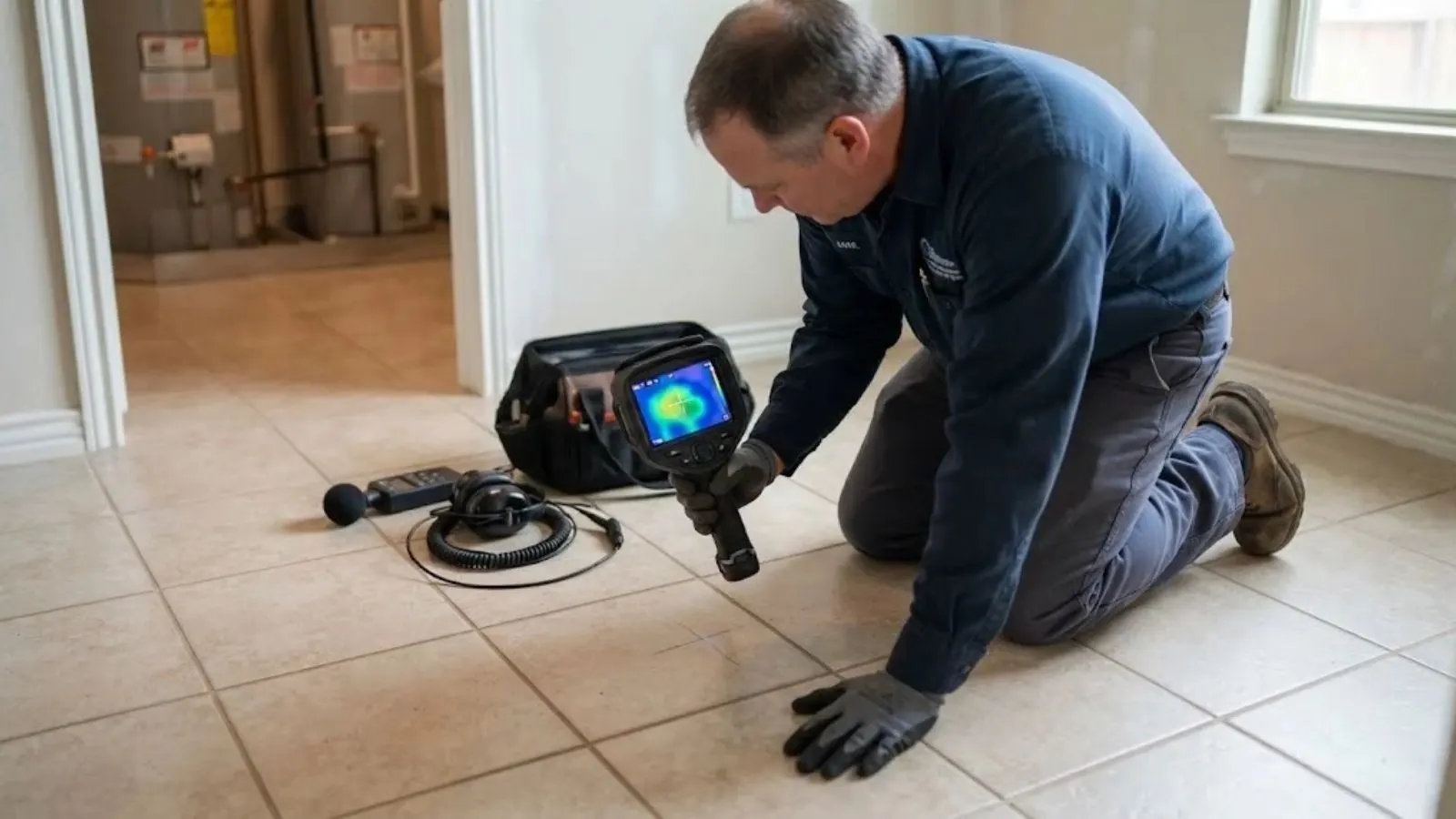
Ground microphones and listening sensors hear the leak, thermal imaging shows heat or cold paths, and tracer gas escapes upward through the leak point.
Agree the repair before opening anything
You get the fix and the price in plain terms before a saw touches drywall or a shovel breaks the lawn. Small spot repairs can often be done the same day when parts are on hand.
Which method finds which leak
No single tool finds everything, so the plumber matches the method to where the pipe runs.
| Method | Best for | Honest limit |
|---|---|---|
| Acoustic listening | Pressurized supply lines under floors and soil | Traffic, wind and plastic pipe muffle the sound |
| Thermal imaging | Hot water leaks, wet drywall, radiant heat paths | Needs a temperature difference to show |
| Pressure testing | Proving a line leaks and which branch | Tells you where the loss is, not the exact spot |
| Tracer gas | Small leaks in buried or enclosed pipe | Gas must reach the surface through soil or slab |
| Camera inspection | Drain and sewer lines, cracks and offsets | Does not show pressurized supply pipes |
A very deep line, or a leak under a thick pour, can take two methods to confirm.
Meter still turning with every tap closed
The meter is your cheapest leak detector. Turn off every faucet, the ice maker, the dishwasher and the washing machine, then look at the low-flow indicator on the meter face. A spinning dial or moving triangle with everything off means water is leaving the system.
Next, close the main shut-off valve at the house and check the meter again. If it keeps moving, the loss is on the buried line between the meter and the house. If it stops, the leak is inside the house or on an irrigation branch.
The toilet dye test
Drop a few drops of food coloring in the tank and do not flush for 15 to 20 minutes. Color in the bowl means the flapper is leaking into it. It is a cheap and common source of a high bill.
Reading a high bill
The City of Jenks says it is replacing about 7,600 older meters with smart meters (city fact sheet), so your meter may be old or new. The city's home water usage sheet lists leaks from piping, toilets and fixtures as a cause of high use, so test the house before assuming the number is wrong.
Ceiling stains and wet walls
A brown ring on a ceiling, bubbling paint or a musty smell inside a wall usually means water has been present for a while. The source can be a supply line, a drain, a shower pan or a roof, so the plumber checks what sits above the stain first.
A moisture meter and a thermal camera map the wet area, then running fixtures one at a time shows which one feeds it. Water runs along framing, so the stain can sit feet from the break. A small inspection cut at the right place beats opening a large section, and the same work is done for homes in Bixby and nearby towns.
Under-house leaks if your home has a crawl space
If your home has a crawl space, a leak there can run for months without a sign upstairs. Wet insulation, sagging subfloor, damp soil, a musty smell and a spongy floor are the usual clues.
The plumber looks over exposed supply lines, drain joints and fittings, and uses the meter and pressure tests to confirm. Homes on a concrete slab are a different case, covered on the slab leak repair page. Oklahoma law exempts leak repairs from the plumbing permit, but replacing runs falls under the 2018 International Plumbing Code (IPC) that Jenks adopted, so call Jenks Building Inspections first.
Buried lines and water service line leaks
The pipe that carries water from the meter to your house is the water service line, and it is one of the most common hidden leaks. Signs include a soggy or unusually green strip of lawn, a warm spot on the ground, a wet yard with no rain or sprinkler use, falling pressure and a meter that moves with the house valve closed.
Ground microphones listen along the line, and tracer gas confirms quiet leaks. Once the leak is located, a spot repair may be enough, or the line may be worth replacing, which the repiping page explains. Ask the City of Jenks water department which side of the meter is yours before you dig.
Sprinkler, pool and meter-box leaks
Irrigation leaks hide in valve boxes, at broken heads and along buried poly pipe. A zone that runs weak, a valve box full of water and a lawn patch that stays swampy all point there.
For a pool or spa, the plumber tests the supply, return and equipment lines, since a bucket test only shows that water is lost, not where. A wet meter box with water around the lid is usually on the meter side, so call the city before touching it.
What to do while you wait for the plumber
A few minutes of prep makes the pinpointing faster and protects what is nearby.
Close the main
Turn the house main valve clockwise to stop active flow. Leave it closed if you can see water coming through a ceiling or wall.
Photograph the meter
Take a picture of the meter face before and after ten minutes with everything off. The plumber can read the change at a glance.
Cut power near water
If water is near outlets, a panel or a ceiling light, switch off that breaker. Do not stand in standing water to do it.
Clear the area
Move rugs and boxes away from the wet zone.
What drives the price of finding a leak
The price depends on how hard the leak is to reach and how many methods it takes to confirm it. You get a clear price before work starts, and no digging or cutting happens until you agree.
Policies differ, so read yours. Many cover resulting water damage from a sudden hidden leak, and some pay for the cost of locating it, while slow seepage over time is commonly excluded. Ask your insurer before work if a claim is possible.
Limits you should know about
Leak detection finds most leaks, but it is not magic.
- Noise masks sound. Road traffic, running irrigation and plastic pipe all reduce what a listener can hear.
- Finding is not fixing. Once the spot is marked, the repair may be a small fitting or a longer pipe job, and you approve the price first.
Hidden leak questions from Jenks homeowners
Start at the meter with every fixture off and watch the low-flow indicator for movement. Movement means a leak, and closing the house main separates the buried line from the plumbing inside.
Yes. The 24/7 line is staffed around the clock, and a licensed plumber is dispatched for active leaks after hours when one is available. Close the main valve while you wait.
Turn off all water use and watch the dial or low-flow triangle for 15 minutes. Any steady movement is water going somewhere, and a photo before and after helps the plumber.
Yes. Locating a leak on the pipe from the meter to the house is covered here, and replacing the line is a repipe job.
It stops the extra use, so later bills should reflect normal usage. The City of Jenks usage sheet lists leaks as a cause of high use, and the water department can tell you what it can review on your account.
Describe what you see on the phone and get a plan for the hunt. Call (855) 575-2890