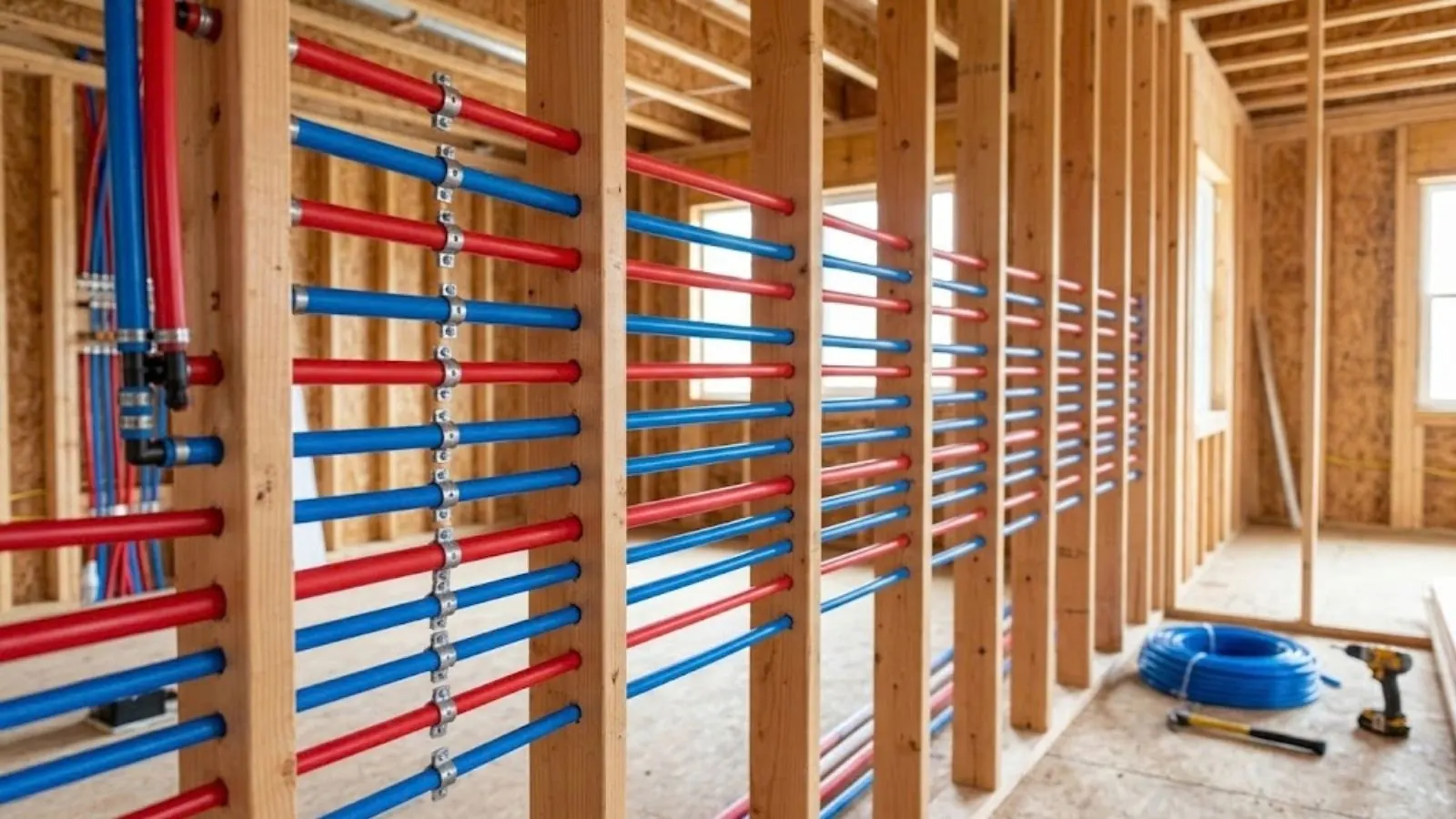
Brown water, weak flow and pinholes that keep coming back
These are the signs that pipe, not a fixture, is the problem. The technical answer is repiping.
Brown or rusty water
Rust-colored water at every tap, especially first thing in the morning, points to corroding iron or galvanized lines.
Low water pressure
Weak flow at several fixtures, not one, often means pipe walls are clogging with mineral or rust.
Repeated pinhole leaks
A second or third pinhole in copper in a short span means the whole run is thinning, not just one spot.
Known problem pipe
Gray polybutylene or galvanized steel are materials plumbers commonly recommend replacing.
Is repiping a Jenks problem?
Census data (ACS 2020-2024) puts the median year Jenks homes were built at 2006, and about 16 percent were built before 1980. Most homes have modern supply pipe, so repiping is less common here than in older cities. It becomes relevant in older pockets near downtown, in homes with a known material problem, or after repeated failures.
Nearby, the picture differs. Census data shows 55.2 percent of Sapulpa homes were built before 1980, so the material question comes up sooner for owners in Sapulpa. In any town, the plumber identifies the pipe before talking about replacing it.
Replacing the water service line from meter to house
The water service line is the buried pipe that brings water from the meter to your house, and it is the most common repipe item here. Signs of trouble include a wet or soggy yard strip, a moving meter with the house valve closed, low pressure at the whole house and a sudden jump in the bill. Locating the failure comes first, and leak detection pinpoints it.
The City of Jenks says homes built after 1986 or updated since then have lead-free service lines, and about 1,800 residents got a 2024 notice because their service line material was unknown (city water service line notice). So check whether your service line material is known, and ask the city water department what its records show. If the material is unknown, a plumber can look at the line where it enters the house.
Replacement means trenching or a trenchless pull from the meter to the house, with new pipe rated for pressure and a new connection at the shut-off valve. Oklahoma requires a plumbing permit for work other than leak repairs, and Jenks follows the 2018 International Plumbing Code (IPC), so ask Jenks Building Inspections. Pipe and fittings for drinking water should carry the NSF/ANSI 61 mark, so ask to see it.
Low pressure: pipe, valve or the street?
Low pressure at one fixture is usually an aerator or cartridge. Low pressure at every tap can be a half-open main valve, a failing pressure regulator, a partial service line break or pipe clogged inside. A plumber checks the gauge at the hose bib, the regulator and the main before recommending anything.
Corroded interior pipe calls for repiping, while a bad regulator or valve is a far cheaper fix, and the plumber says so.
PEX or copper: how the choice goes
PEX and copper are the two common supply pipes today, with CPVC a third option for some homes.
PEX
- Flexible plastic pipe that bends around corners
- Fewer joints, so fewer places to leak
- Often faster to install, with less wall opening
- Resists freeze splits better than rigid pipe
- Not for UV exposure or direct sunlight
Copper
- Long track record and rigid, neat runs
- Handles heat well and does not burn easily
- Takes more time and skill to solder joints
- Can corrode with aggressive water or at fittings
- Higher material cost than PEX
CPVC is stiffer than PEX, lower in cost and common in some builders' work, but it can crack with age and cold, so the plumber weighs it case by case. A plumber who handles slab leak repair will often reroute through the attic in PEX.
How a repipe job runs
A repipe is planned, not improvised.
Survey and pressure test
The plumber maps the lines, names the material and tests pressure so the scope is based on facts.
Choose the pipe and layout
You pick PEX, copper or CPVC, and the plumber shows where new runs will go, usually through attic and wall cavities.
Water off and roughing in
New lines are run to each fixture, with access holes cut in drywall where needed. Water is off for part of the day.
Connect and test
Fixtures are reconnected, the system is pressure tested and checked for leaks before any wall is closed.
Patch and clean
Drywall holes are patched ready for paint.
What to do if a pipe fails before the repipe
Pinhole leaks in old lines can turn into a spray without warning. Work through these four steps while the 24/7 line sends help.
Shut off the water
Turn the main valve clockwise. If it will not move, do not force it with a wrench, and tell dispatch.
Kill power near water
Switch off breakers for wet rooms. Do not step into standing water near outlets.
Protect what you can
Move rugs, boxes and electronics. Catch water with buckets and towels, and photograph the damage for your insurer.
Call the 24/7 line
Call (855) 575-2890, describe the pipe material if you know it, and say where the water is coming from.
Whole-house or partial repipe?
A partial repipe replaces one failing branch, such as the kitchen run or the line to the water heater. It is the sensible path when the rest of the pipe is sound and the leak is isolated. A whole-house repipe makes sense when the same material is failing everywhere, such as poly or galvanized.
Ask for both quotes, and ask which pipe, fittings and walls are involved. Polybutylene, gray plastic pipe used in some homes, and galvanized steel, which rusts from the inside, are the two most common triggers.
What drives a repipe price
No two houses are alike, so the price follows the scope. You get a clear price before work starts.
Policies differ, so read yours. A planned repipe is usually seen as maintenance and is rarely covered, but sudden water damage from a failed pipe may be. Ask your insurer before work if a claim is possible.
Repiping questions from Jenks homeowners
Repeated leaks in the same system, brown water at every tap, or a known problem material such as polybutylene or galvanized point to repiping. A single isolated leak is usually a repair.
It depends on house size, pipe material and access, so the plumber gives a clear price before work starts after seeing the home.
Yes in most cases, because galvanized steel rusts from the inside, narrows the flow and eventually leaks. Replacing it with PEX or copper restores pressure and ends the rust.
Not always. If the line leaks, has unknown material or runs low pressure to the house, replacing it with the repipe saves digging twice.
Many jobs take a few days depending on the size, with water off for part of each day. The plumber tells you the plan before starting.
Describe the pipe trouble and get an honest repair-or-repipe answer. Call (855) 575-2890