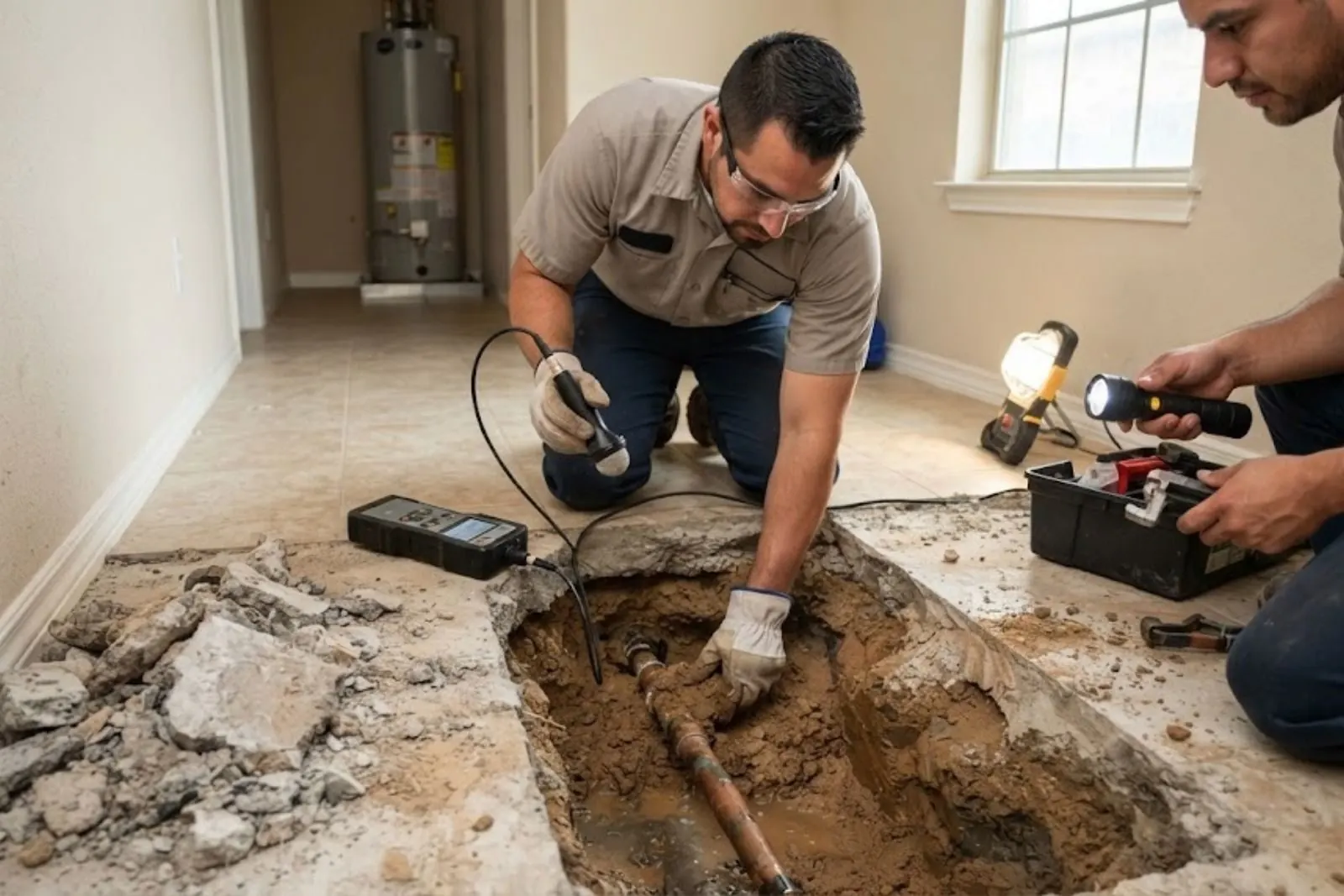
Urgent signs: a warm floor spot and water sounds with no faucet on
A hot patch on tile or wood, a faint rush or hiss when the house is quiet, and a meter that moves with every fixture off are the textbook signs of a slab leak. So are a water bill that climbs without a reason, pressure that sags at every tap and carpet that stays damp near an exterior wall.
Together these point to a failed supply line under the concrete, which plumbers call a slab leak. A hot water line shows as a warm spot, a cold line often shows as a damp one, and the sound travels through the slab like a pipe through a wall.
What breaks a line under the slab
The failure is usually one of a few mechanical causes.
Pipe rubbing the concrete
Copper that shifts as it heats and cools can wear against gravel or rough concrete until a pinhole opens.
Corrosion from outside
Chemistry in the bedding around the pipe, or in the water itself, can eat thin walls over time.
A bad joint or fitting
Builder-grade solder, a poor crimp or a fitting set under stress can fail years after the pour.
High water pressure
Pressure set too high strains every joint and pinhole-prone spot, which a regulator test can check.
Ground movement
Shifting ground can stress lines under a slab. Whether that applies depends on your lot, and the plumber looks at the pipe, not the soil, to decide.
Spot repair or reroute: how the choice usually goes
Both fix the leak. They differ in mess, cost and how long they last.
Repair through the slab
- Cuts a small opening in the floor over the leak
- Digs a tunnel or a pit to reach the pipe
- Replaces the damaged section with new pipe
- Faster when the rest of the line is sound
- Floor covering above the cut needs patching
Reroute overhead
- Abandons the leaking line in the concrete
- Runs new pipe through the attic or walls
- Avoids breaking the slab at all
- Makes sense when the line is leaking in several places
- Needs drywall access and patching
A plumber who sees one pinhole on an otherwise clean line usually leans toward a repair. Two or more leaks in the same run lean toward a reroute.
The three repair paths, in plain terms
Which one fits depends on the pipe, the leak count and what covers your floor.
Spot repair under the slab
The plumber marks the leak, opens the floor, digs down to the pipe and swaps the failed section for new copper or PEX. The area is dried, tested and then closed with new concrete. Flooring above, such as tile or hardwood, is part of the repair job and needs a separate patch.
Reroute overhead
A new line runs from the main to the fixtures through the attic or inside walls, and the slab line is capped off. Because nothing is cut in the floor, it keeps the finished surfaces intact. It adds drywall patching, and the old pipe stays buried. A reroute is new piping, so the 2018 International Plumbing Code (IPC) that Jenks adopted applies, and Oklahoma exempts only leak repairs from the permit, so ask Jenks Building Inspections about yours.
Repipe the whole house
When the copper has corroded or leaks again in other places, repiping replaces the supply system rather than chasing it. The repiping page explains materials such as PEX and copper and what the work involves.
What to do before the plumber gets there
Water under a slab is slow to show, so a few actions limit damage.
Close the main valve
Turn it clockwise at the house. If the meter keeps moving after that, the leak is on the buried line before the house.
Photograph what you see
Take pictures of the warm spot, any wet carpet, the meter face and your last water bill for the plumber and your insurer.
Keep traffic off the spot
Do not drill, nail or tile into the warm area, and keep children and pets away from hot floor patches.
Lift what can be lifted
Roll up rugs, move boxes and raise furniture off wet carpet, then run a fan across the area if the room is safe to enter.
What shapes a slab leak quote
Slab work varies more than most plumbing jobs, so the price follows the plan. You get a clear price before work starts.
Policies differ, so read yours. Many cover resulting water damage from a sudden slab leak and sometimes the cost of reaching the pipe, but the repair of the pipe itself is commonly excluded. Ask your insurer before work begins.
Slab leak repair versus leak detection
Leak detection finds the leak. Slab leak repair fixes a line that the concrete has hidden. Many slab jobs begin with a locating visit, and the same plumber can often continue to the repair once you approve the plan. If a pipe has split and water is actively gushing, that is a job for burst pipe repair instead.
Census data (ACS 2020-2024) puts the median year Jenks homes were built at 2006, with about 16 percent built before 1980. Newer homes still fail from rubbing, bad joints and pressure. If you live in one of the older pockets near downtown, the pipe material may be different, which changes the options. Homeowners in Bixby face the same choices.
Slab leak questions from Jenks homeowners
A warm floor spot, the sound of running water with all fixtures off, a moving meter and low pressure together point to a slab leak. A plumber confirms with listening and pressure tests.
Yes. The 24/7 line is open at night and on weekends, and a licensed plumber is dispatched when available. Close the main valve while you wait.
Not always. A reroute overhead leaves the slab intact, while a spot repair opens a small section of floor over the leak.
Look for a floor with no crawl space or basement under it, or check your home's plans. If you are not sure, ask the plumber who comes out.
Often yes for a single leak on sound pipe. A repipe is considered when the line has failed more than once or the pipe is corroding.
Describe the warm spot or sound, and get a repair plan. Call (855) 575-2890