Which snake for which drain
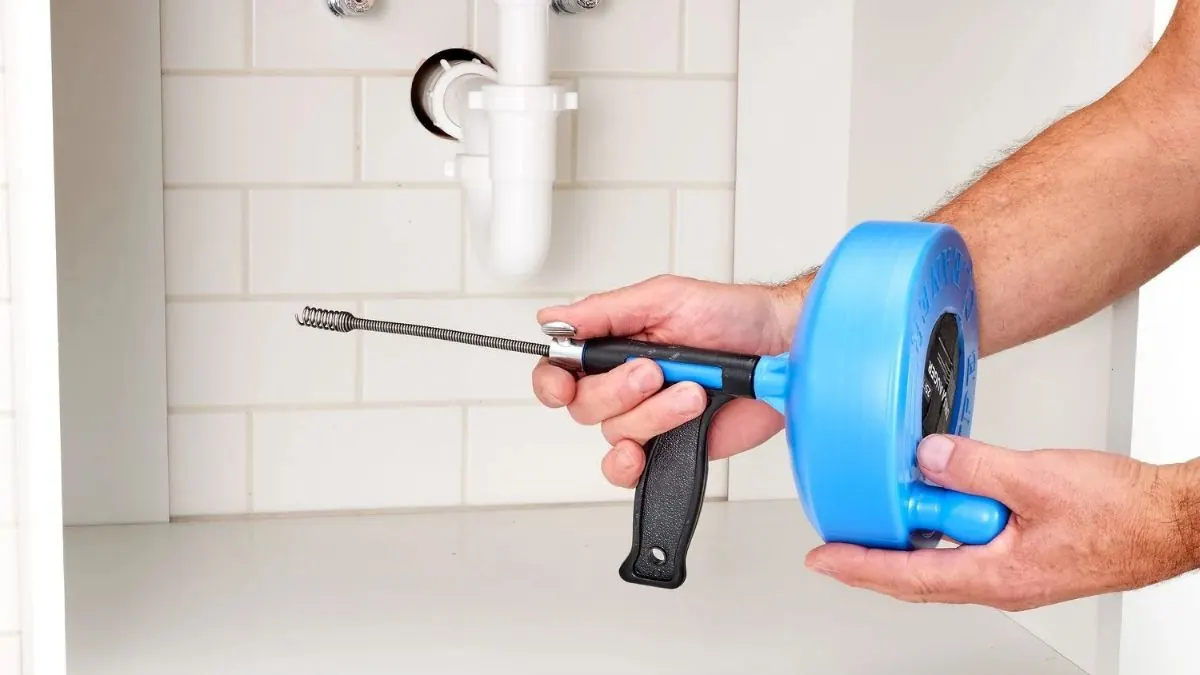
A plumbing snake, also called an auger, is a flexible steel cable on a crank. It reaches past the trap and either snags the clog or breaks it into pieces small enough to flush. The common homeowner types are the hand-crank drum auger and the closet auger.
Use a closet auger for toilets only. Its short, stiff cable and rubber sleeve are shaped to pass through the porcelain bend without scratching it. Use a drum auger, typically a 25-foot cable in a canister, for sinks, tubs and shower drains.
The International Plumbing Code (IPC), which Jenks has adopted, requires a trap on each fixture, and that trap is the first place a sink clog usually sits.
Drum auger versus closet auger
The two tools look alike but solve different problems.
Drum auger
- Cable runs 15 to 50 feet from a canister with a hand crank
- Fits sinks, tubs, showers and cleanouts
- Has a thumbscrew to lock the cable at the drum
- Can be run with a power drill on larger units
- Can scratch or damage thin pipe if forced
Closet auger
- Cable is about three to six feet long inside a rigid tube
- Made for toilets, with a rubber boot to protect porcelain
- Curved tip follows the toilet trap bend
- Cranks by hand with a short handle
- Useless on sinks or long drain lines
For a main sewer line, neither tool is the right one. Tree roots, a collapsed pipe or a long run call for a larger machine or sewer line cleaning by a plumber.
Feeding the cable, step by step
Work slowly. Most mistakes happen when someone cranks hard against a bend.
Prepare the drain
Remove the stopper or strainer. For a sink, put a bucket under the trap, pull the trap if you can, and feed the cable straight into the wall stub for a cleaner path. Wear gloves and put a towel around the opening.
Feed and crank
Push the cable in a foot or two at a time. When it stops, lock the thumbscrew about a foot from the opening, crank clockwise, and push gently. A turn that suddenly loosens means you passed through a bend or the clog.
Break or hook the clog
If the cable meets soft resistance, push through it. If it hits something hard, back off a few inches and try a different angle. Never lean on the drill or force a kinked cable.
Retrieve and flush
Pull the cable back slowly while cranking, and wipe off gunk with a rag as it comes out. Run hot water for two minutes. If the drain stays slow, repeat once, then stop.
Safety steps and cleanup
Wear rubber gloves and eye protection, because a cable can fling dirty water and debris back at you. Keep the cable moving forward as you crank, and never wrap it around your hand. If it binds, release the crank instead of fighting it, since a bound cable can whip. Follow the manufacturer's instructions for cable length and speed, because forcing a cable past its rating can crack a trap.
After the job, wash the cable with warm soapy water and dry it before storing it, or the steel will rust and the next use will shed flakes into the drain. Wipe down the sink and run hot water to flush loosened debris. A drain that clears and then slows within days is telling you the clog was only partly removed, and a longer cable or camera is the next step.
Stop, rent or hire
A snake is a good first tool, but it has limits.
| Situation | Best option | Reason |
|---|---|---|
| Single sink or tub slow | Hand-crank drum auger | Short reach, low risk |
| Toilet only | Closet auger | Porcelain-safe design |
| Cable keeps stopping at the same spot | Stop and call | Likely a break or fitting |
| Multiple fixtures backing up | Plumber with cleanout access | Main or branch line |
| Roots suspected | Hydro jetting or a root cutter | Hand tools bounce off roots |
| Sewage in a floor drain | Call 24/7 | Do not run water |
Renting a power auger sounds cheaper, but kinked cable and cracked pipe cost far more than a service call.
Jenks, Oklahoma: cleanouts and your property line
The City of Jenks publishes that Jenks Public Works maintains the city's sewer system, which ends at the public main. The line from your house to the main is on your side, and a cleanout cap in the yard or garage is where a plumber feeds a large cable.
Census data shows the median Jenks home was built in 2006, so most drains are PVC, which scratches more easily than cast iron. Keep a drum auger away from thin traps and use a closet auger instead of a hanger. The same applies in Bixby and Sapulpa, where Sapulpa's older housing stock may include cast iron or clay that a hand auger can snag.
Risks to older and thinner pipes
A snake can scrape a clay or cast iron pipe, snag a rusted joint or push a clog into a tighter bend. In plastic pipe, a driven cable can nick the wall and cause a leak at a fitting. Use a manual crank, stop at a hard stop, and never run a drill on a closet auger. If you see rust flakes or dark water coming out with the cable, the pipe may be failing.
Plumbing snake questions
Use a closet auger only. A drum auger can scratch the bowl and kink in the toilet's tight bend.
Feed until it meets resistance, then work the clog. Many household clogs sit within the first 10 to 15 feet of the line.
A power auger can damage pipe in inexperienced hands. A plumber can also run a camera first, which shows what the cable cannot.
Not if you stay gentle, but forcing a cable can nick the pipe wall or loosen a joint.
No. The City of Jenks maintains the public sewer through Jenks Public Works, and the house-to-main portion is generally the homeowner's. Call the city if you are unsure which side the blockage is on.
Cable stuck or the clog keeps coming back? Our 24/7 line is open. Call (855) 575-2890