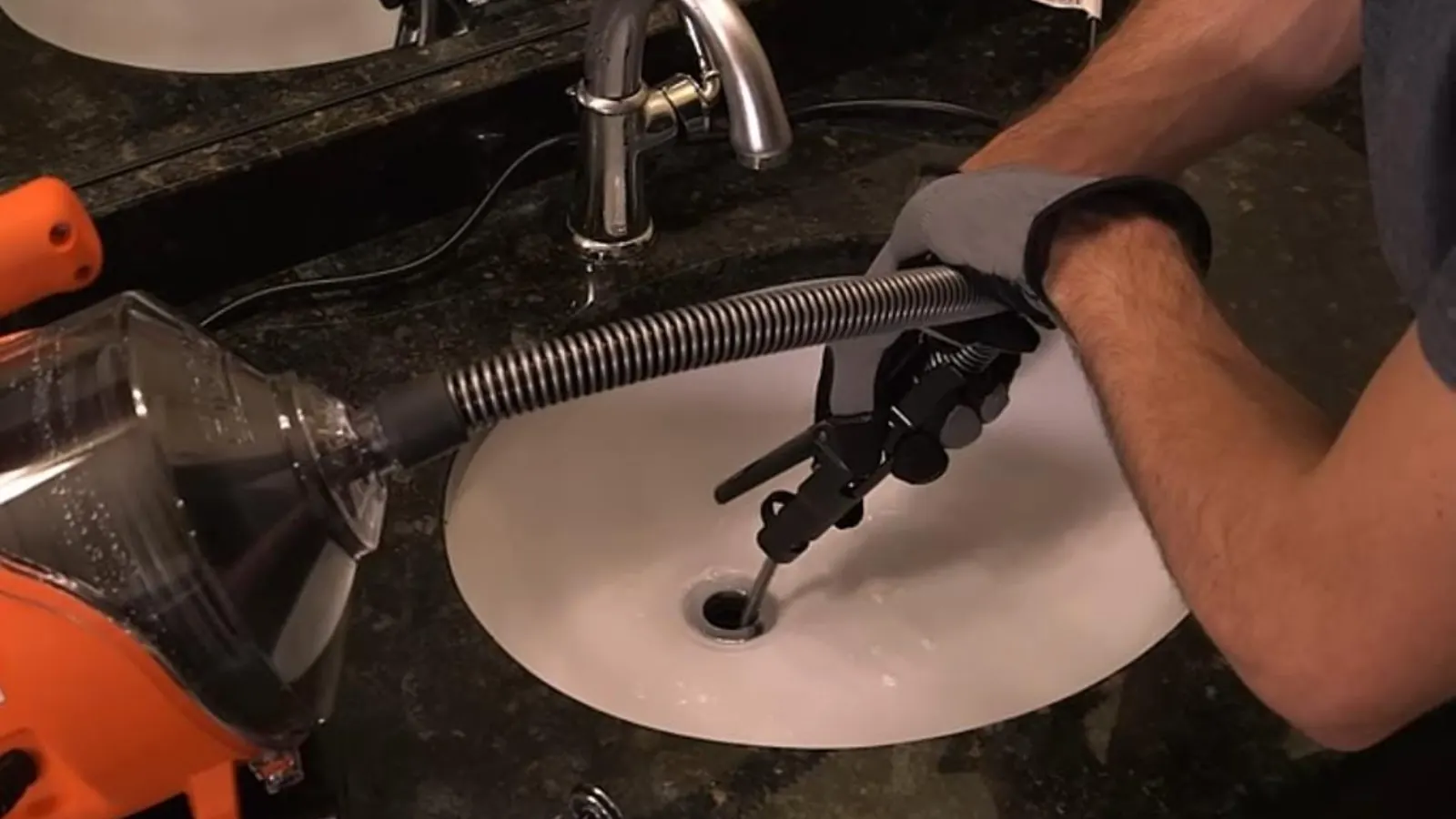
Where a slow bathroom sink really clogs
The location of the buildup decides the fix, and most of it sits within the first ten inches of the drain. Plumbing standards such as the IPC call for a trap and a vent on every sink drain, which is why gurgling usually points to the vent and not the pipe.
Pop-up stopper
Hair snags on the horizontal pivot rod and holds a mat of soap and toothpaste. This is the most common cause and takes five minutes to clear.
Tailpiece and P-trap
The curved trap under the sink holds standing water and collects gunk. A bottle brush or a trap cleanout often clears it.
Branch line
The pipe behind the wall that carries the sink to the main stack can narrow with scum over years. Several fixtures running slow points here.
Vent problem
A drain needs air behind it. A blocked vent makes water move slowly and gurgle, even when the pipe itself is clear.
Mineral or product film
Heavy gels, shaving cream and toothpaste can coat the pipe wall. Flushing with hot water helps, but a cable is the real cure.
Clear the stopper and trap yourself
Start at the top. Lift out a lift-rod stopper by loosening the nut on the pivot rod behind the drain pipe, then slide the rod out of the stopper. A push-and-seal or flip-it stopper usually unscrews or pops out by hand. Wipe off the gray slime and pull out the hair with a bent wire or a plastic zip strip.
If the sink still drains slowly, put a bucket under the trap and unscrew the two slip nuts by hand. Pour out the water, pull out the sludge, and rinse the trap in a utility sink. Reassemble the nuts hand-tight plus a quarter turn, then run the tap and watch the joints for drips.
When it is not the trap
If the trap is clean and the sink still drains slowly, run the tap for a minute and listen. Gurgling, a sucking sound, or a smell of sewer gas from the bowl suggests a vent restriction. Bird nests, leaves or ice can partly block a roof vent, and that is a job for a licensed plumber with roof access.
What to leave alone
Skip liquid drain openers in a bathroom sink. They sit in the trap and can eat into chrome, plastic and old rubber seals. If one is already in the sink, wear gloves and call before you disassemble anything.
Slow sink diagnosis at a glance
Use the symptom to decide whether a DIY fix is worth the effort.
| What you notice | Likely cause | Next step |
|---|---|---|
| Slow only after a week of use | Stopper buildup | Pull and clean the stopper |
| Water pools, then drains with a gurgle | Partly blocked vent | Call a plumber to check the vent |
| Trap holds a foul smell when disassembled | Trap sludge | Clean the trap and rinse |
| Shower and sink both slow | Branch line buildup | Drain cleaning with a cable |
| Toilet gurgles when sink drains | Shared line or main | Stop and call 24/7 |
| Slow after a recent renovation | Poor slope or loose joint | Have the line checked |
One slow fixture is a local problem. Two or more slow fixtures usually mean the line behind them.
Prevent the next slow drain
A little habit change keeps the stopper clean for months. Pull the stopper and wipe it every month or two, especially in a bathroom with long hair. A drain strainer that sits in the opening catches most hair before it reaches the pivot rod.
Skip heavy gels and oily hair products where you can, because they coat the trap wall and trap hair. Flush the drain with a kettle of hot tap water after a deep cleaning, but not boiling water on a PVC trap, which can soften the joints. If the sink slowed down right after a renovation, a poorly sloped trap arm may be holding water, and that is worth a plumber's look.
Clearing the line when the stopper is clean
When both the stopper and trap are clean, the buildup is further down.
Run hot water for two minutes
Add a squirt of dish soap and let the hot water carry loose scum down the line. This clears only a light film, not a real blockage.
Try a small drain snake
Use a hand-crank hair snake with barbed teeth rather than a heavy auger, which can scratch finish and kink thin pipe. Feed it through the sink drain opening or, once the trap is off, straight into the wall stub.
Check for other slow fixtures
Run the tub and flush the toilet. If they slow too, you are not dealing with one sink. A branch line needs a longer cable or hydro jetting.
Stop when you meet resistance
If the cable stops hard or springs back, do not force it. Cabled hard against a bend or a fitting, it can scrape or crack the pipe, especially thin PVC.
Jenks, Oklahoma: new homes, same slow drains
Census data shows the median Jenks home was built in 2006, and about 16 percent were built before 1980. In a newer house the pipe is usually PVC, so slow sinks are almost always scum, hair and product buildup, not corroded steel. If your home is one of the older pockets near downtown, a cast iron or steel branch with rust scale is a real possibility.
The City of Jenks says Jenks Public Works maintains the city sewer, so a slow drain inside your house is on your side of the line. A cleanout outside the home lets a plumber cable the whole line. Neighbors in Bixby and Sapulpa see the same pattern, though Sapulpa has a larger share of older houses where a cast iron or steel branch is more likely.
Slow bathroom sink questions
A partial blockage, usually hair and soap scum at the stopper or trap, narrows the pipe. Water still gets through, just slowly.
Yes. Without air behind the water, the drain moves slowly and gurgles. A plumber can check the vent from the roof.
It can break up a light film but will not clear hair. Pulling the stopper does far more.
If the stopper and trap are clean and other fixtures drain slowly, the buildup is probably in the branch line. A plumber can snake or jet it.
They do. Newer PVC drains still collect hair, toothpaste and soap, and low-flow faucets send less water to carry it away.
If the line behind your sink is slow, our 24/7 line can send a plumber. Call (855) 575-2890