What a water heater installation includes
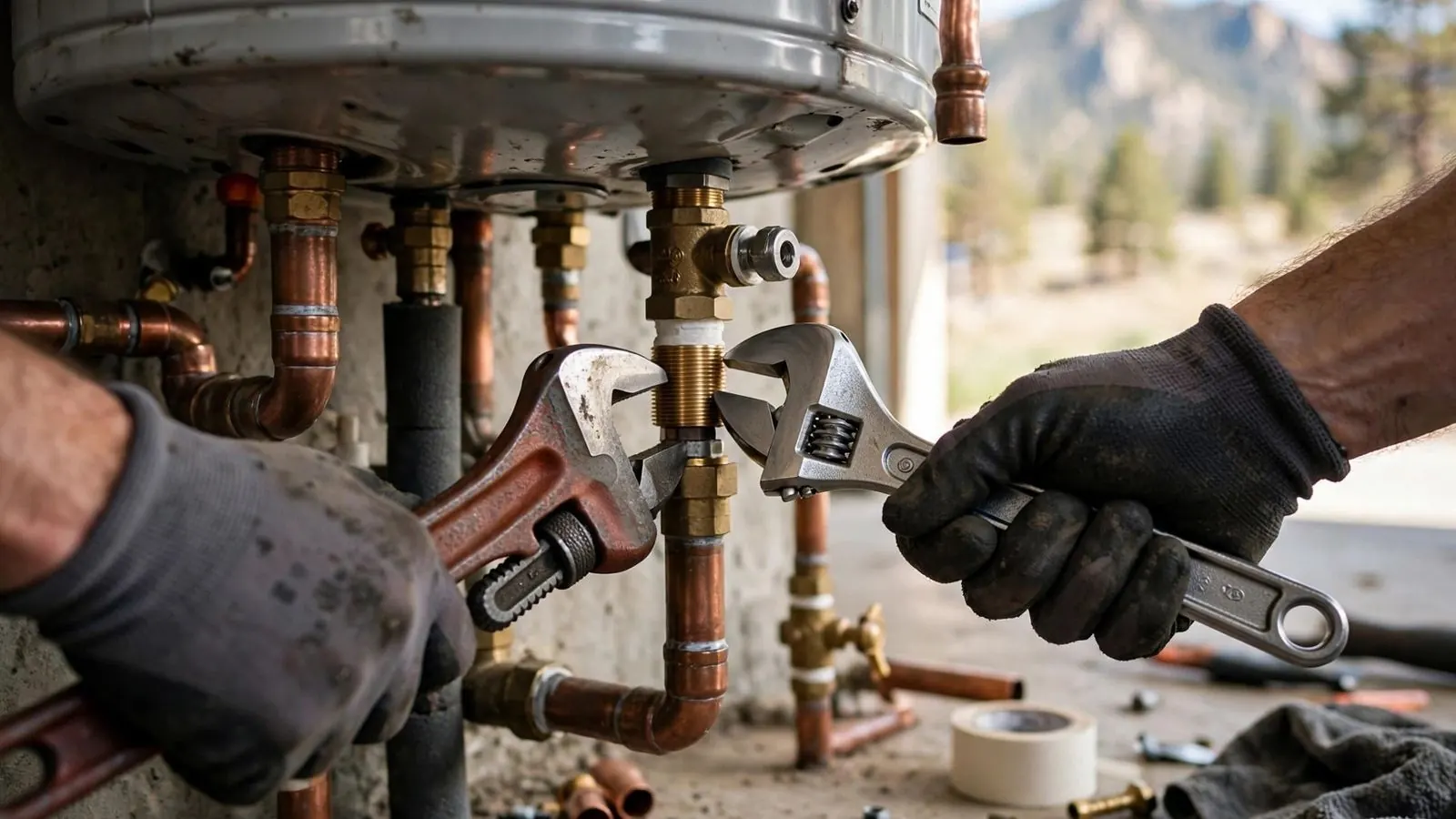
Water heater installation means placing a new unit where none exists, or moving or upgrading one, and connecting its water, fuel, venting and safety parts correctly. The work covers the shutoff valve, flexible connectors, a temperature and pressure relief valve with a discharge pipe, a drain pan where required, and a vent for gas models. It sits inside the wider category of plumbing installation, which also covers fixtures and new supply lines.
Census ACS data puts the median Jenks home at 2006 construction and shows roughly 3,300 homes built from 2010 to 2019. That means a lot of newer houses with builder-grade heaters now coming due, and many owners use that moment to resize or relocate rather than copy what the builder put in.
Where the heater goes and what it needs
The location sets the code items, so choose it before you pick a model.
| Location | Main considerations | Common extras |
|---|---|---|
| Garage | Gas models usually need the burner raised off the floor and protected from vehicle impact | Drain pan, bollard or protection, raised stand |
| Closet | Combustion air and vent clearance, plus limited height | Louvered door, pan and drain, sloped vent |
| Attic | Weight, access and leak damage risk below | Large pan with a drain line, access platform |
| Basement or crawl space if present | Drain access and floor slope | Pan, sump or floor drain nearby |
| Outdoor or exterior closet | Freeze exposure | Insulated lines and a protected enclosure |
| Utility room | Easy access and floor drain | Standard pan and expansion tank |
Local requirements vary, so the plumber confirms placement rules for your lot.
Questions to settle before the install day
- Fuel. Gas, electric or heat pump, based on what the home already has and the cost to change.
- Capacity. Size for the people who use hot water at once, not just the head count.
- Location. Where the vent, drain and gas or power can reach without long new runs.
- Type. Standard tank, high-efficiency tank or a tankless water heater for on-demand use.
- Old unit. Whether the existing tank will be drained, disconnected and hauled away.
- Permits. Who handles any permit questions before work starts.
Gas, venting and permit questions
Planned work gives you time to check the details that matter most for safety and for passing inspection.
Gas connection and gas line work
A gas heater needs a correctly sized line, a shutoff valve, a sediment trap or drip leg where required, and a leak test at every joint. Safety comes first with gas, so if you smell it at any time, leave the building and call the gas utility or 911 before anyone else. Whether new gas line work is needed, and what it involves, is confirmed on the call and again on site.
Venting and combustion air
Gas heaters must carry exhaust outside through a vent with proper slope and clearance, and they need enough air to burn cleanly. Condensing and power-vent models use plastic pipe and can run horizontally. Electric models need none of this.
Relief valve, expansion tank and pan
Every tank needs a temperature and pressure relief valve piped to a safe drain point. An expansion tank is usually added when the home has a check valve or pressure regulator, and a pan with a drain protects floors in tight or upper spaces.
Permits
Do not assume a rule either way. The City of Jenks Building Inspections office publishes its line at 918-556-7439, so you can ask the city building department what applies to your project. The plumber on the job handles permit questions as part of the work.
Types of installs this page covers
New construction
Rough-in of supply, gas, vent and drain lines before the walls close, then the heater set at trim-out.
Relocating the heater
Moving it from a closet to the garage, or the reverse, with new lines and venting.
Upgrading size or efficiency
Stepping up to a bigger tank, a high-efficiency model or a heat pump water heater.
Tank to tankless
A wall-hung unit needs a larger gas line, a stainless or plastic vent and a power outlet.
Remodels and additions
Adding a bathroom or laundry may need a second heater or a recirculation line.
What shapes an installation price
Because the plan is yours, the price depends on the choices you make. You get a clear price before work starts.
Installation is a planned upgrade and is not usually an insurance claim, though a covered water loss may fund a replacement, so check your policy.
Installation questions from Jenks homeowners
Ask the City of Jenks building department, which publishes 918-556-7439 for permits and inspections. The plumber on the job handles permit questions as part of the installation.
Yes, with new supply lines, a vent path and, for gas, a gas connection. A garage gas unit also needs protection and raising off the floor.
Gas line work is confirmed on the call and again on site. The plumber checks the existing line size before anything is changed.
A like-for-like swap often takes a few hours. A relocation or new vent can take longer, and the plumber gives you the plan when quoting.
It can be, if you have the gas capacity and space. The tankless water heater page covers service, flushing and the Jenks water.
Yes, Glenpool, Bixby, Sapulpa and Kiefer are served too. See Bixby for example.
Call to talk through size, fuel and location for your project. Call (855) 575-2890