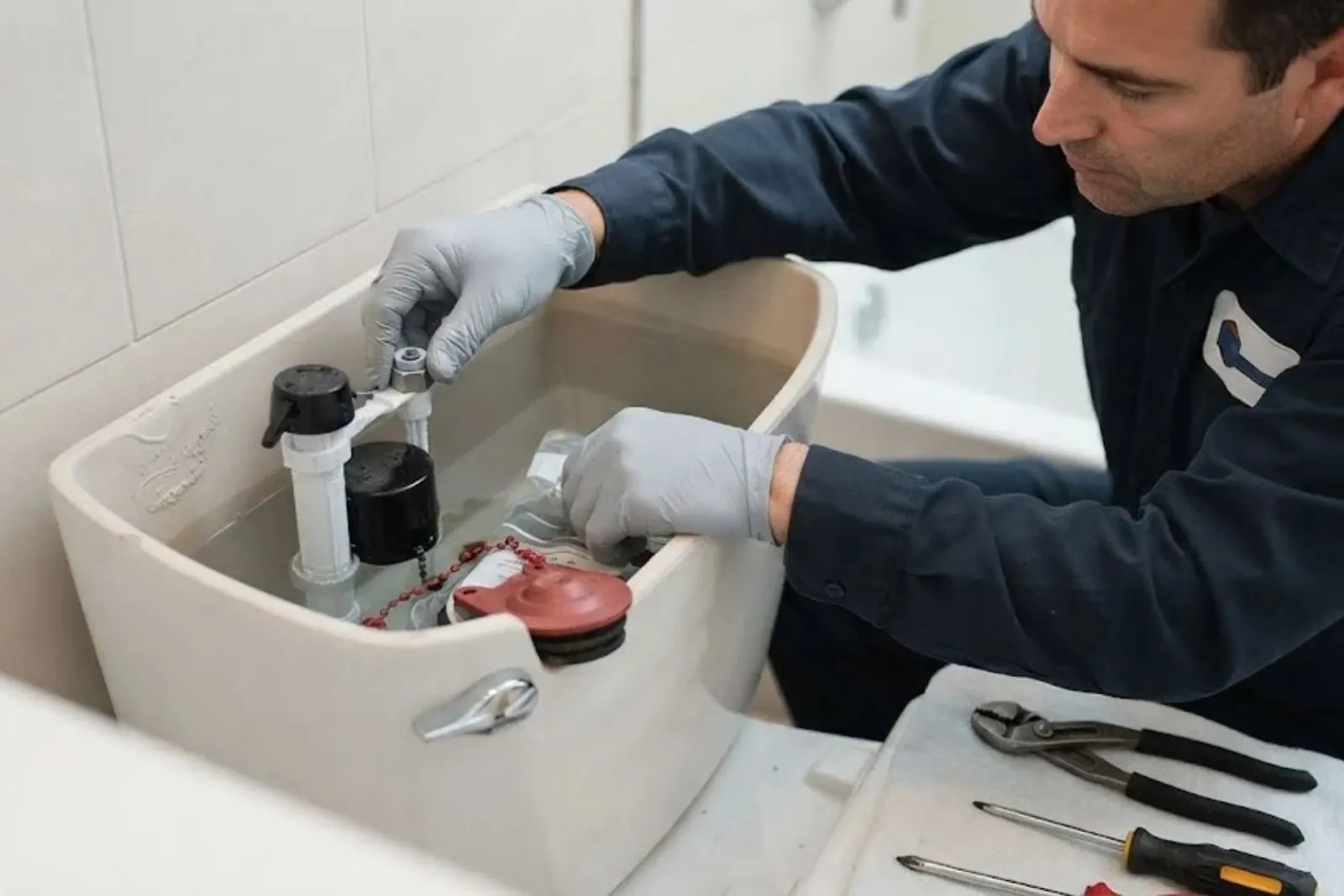
Is the toilet clogged or is a part failing
Two different problems get called a bad toilet. A clog is an obstruction in the trap or the drain, and a failing toilet has a worn part in the tank or at the floor seal. The fixes are not alike, so sorting them out first saves a trip. Calls from Glenpool reach the same dispatch line.
If the bowl fills, rises and drains slowly, it is a clog. If water keeps running, hisses, drips from the base or the bowl rocks, a part has failed. If several fixtures in the house act up at once, the problem is past the toilet, and sewer line repair may be the real answer.
What each symptom usually means
Match what you see to the likely cause.
| What you see | Likely cause | DIY or call |
|---|---|---|
| Bowl rises, drains slowly | Clog in trap or drain | Plunger first, then call |
| Tank refills every few minutes | Leaking flapper | Often a simple DIY swap |
| Water runs without stopping | Worn fill valve or float | DIY with care |
| Puddle at the base | Failed wax ring or loose bolts | Call, floor may be damaged |
| Toilet rocks on the floor | Loose flange or bolts | Call |
| Stop valve drips or will not turn | Worn supply valve | Call, do not force it |
A toilet that backs up into a tub or floor drain points to the main line instead.
When an overflow cannot wait
Do these in order while the line connects you with dispatch.
- Lift the tank lid. Push the flapper down to stop more water entering the bowl.
- Close the stop valve. Turn the oval handle on the wall behind the bowl clockwise until it stops.
- Do not flush again. Each flush adds water to a bowl that cannot drain.
- Contain the water. Towels along the base protect the floor. Wear gloves if the water is dirty.
- Call if the valve will not close. Shut off the main water valve to the house, then call the 24/7 line.
The parts that wear out in a toilet
Most toilet repairs come down to three places: the tank parts, the floor seal and the supply connection. Each one gives a different symptom.
Fill valve and flapper
The flapper is the rubber seal at the tank bottom. When it warps, water seeps into the bowl and the tank refills on its own with a phantom flush. The fill valve controls refilling and fails when it hisses or never shuts off. Both are inexpensive parts.
A running toilet wastes water quickly. The City of Jenks notes in its home water usage sheet that household use includes leaks from toilets, so a running tank can show up on your bill.
Wax ring and flange
A wax ring seals the toilet outlet to the closet flange on the floor. When it fails, you see water at the base, smell sewer gas, or notice soft flooring. The toilet has to be lifted to replace the ring. If the flange itself is cracked or sits below the floor, it needs a repair ring first or the new seal will not hold.
Leak at the base and supply valve
A wet base is either the wax ring, a loose bolt, or condensation on the tank and bowl. Check whether the water appears only after a flush. A drip from the supply line or stop valve is a separate fix, and the valve itself may need replacing if it is crusty or stuck.
Installing a new toilet: what the job involves
Replacement makes sense when the porcelain is cracked, the bowl keeps clogging, or repairs cost more than the fixture. It also fits a bathroom remodel, where plumbing installation covers the rest of the fixtures.
Measure the rough-in
Rough-in is the distance from the finished wall to the center of the flange. Twelve inches is the most common, and a toilet must match it.
Remove and inspect
The old toilet comes up, the flange and floor are checked for rot or damage, and the old wax is scraped off.
Set the new bowl
A new wax ring or foam gasket goes on the flange, the bowl is set level, and closet bolts are tightened evenly so the porcelain does not crack.
Connect the supply
A new braided supply line and, if needed, a new stop valve connect the tank. Then the tank is filled and tested for leaks.
Pick an efficient model
WaterSense is a real EPA label for toilets that use less water per flush. It is worth asking for if you are replacing a fixture.
How toilet repair and installation is priced
A running toilet and a full replacement are very different jobs. You get a clear price before work starts.
A sudden overflow that damages floors may be covered, but worn parts and slow base leaks usually are not. Policies differ, so read yours.
Before the plumber arrives
These steps limit damage and speed up the visit.
Shut the stop valve
Turn it clockwise until snug. If it spins freely or leaks, shut off the main instead.
Clear the floor
Pull rugs and mats away and mop standing water to protect the subfloor.
Do not use chemicals
Drain chemicals in a standing bowl splash onto skin and the plumber.
Note the symptom
Tell dispatch whether it overflowed, leaks at the base or runs. Mention if other drains are slow too.
Toilet questions from Jenks homeowners
Yes. The line is open 24/7, and same-day appointments are offered when available. For an active overflow, close the stop valve first and then call.
Usually a leaking flapper or a worn fill valve. Add a few drops of food coloring to the tank, and if color reaches the bowl without flushing, the flapper is leaking.
A new wax ring is the fix when the base leaks and the porcelain is sound. A cracked bowl or tank means replacement.
Do not force it, since an old stem can snap. Shut off the main water valve and call to have the toilet supply valve replaced, much like a sink stop valve under faucet repair.
Measure from the wall behind the tank to the center of the closet bolts, not the baseboard. Twelve inches is common, but ten and fourteen exist.
Yes, removal and haul-away are part of the replacement price we give you up front.
Toilet overflowing or leaking? Call now. Call (855) 575-2890