The fastest way to know if water is escaping
Shut off every tap, appliance and ice maker in the house, then watch your water meter. If the small dial or the low-flow triangle keeps turning with nothing running, water is leaving your pipes somewhere. That single check separates a real leak from a high bill caused by habits.
If the meter holds still, the leak is probably not on the supply side. Your next suspects are fixtures that leak internally, mostly toilets, and drain-side problems that never touch the meter at all. The rest of this guide walks through each test in order, from cheapest to most involved.
According to the EPA WaterSense program, the average household loses nearly 10,000 gallons of water a year to leaks, and about 10 percent of homes lose 90 gallons a day or more, which is why a quiet meter test is worth the ten minutes.
Run the meter test properly
Do this when nobody is home or at night, so no one flushes mid-test. Meter lids are heavy and sometimes hold insects, so lift the lid with a screwdriver tip instead of your fingers.
Stop all water use
Close taps, pause the dishwasher and washing machine, and turn off the ice maker. Check that no one is mid-shower and that the irrigation timer is not due to run.
Read the meter
Find the leak indicator, usually a small triangle, star or dial that spins even at a trickle. Write down the full register reading and the time.
Wait and compare
Wait at least 30 minutes, or leave it overnight for slow leaks. Read it again. Any change in the number, or a moving indicator, means water is flowing.
Close the main and repeat
Shut your home's main valve, then look at the meter again. If it stops, the leak is inside your house plumbing. If it keeps turning, the leak sits between the meter and the house.
Which result points where
Use the outcome of the meter test to narrow the search before you open a wall.
| What you see | Likely area | Next move |
|---|---|---|
| Meter moves, stops when main is closed | Pipes inside the house | Check wet spots, then water heater and fixtures |
| Meter moves even with main closed | Line between meter and house | Look for soggy yard or a damp slab edge, then call |
| Meter still, bill is high | Toilet, habits or seasonal use | Run the toilet dye test |
| Meter still, floor feels warm | Hot line under the floor | Call a plumber for a hot-line check |
| Meter still, musty smell | Drain or vent leak | Look under sinks and behind tubs |
| Meter moves only when hot water is used | Water heater or hot side | Inspect the tank base and relief valve line |
A meter that moves a little only after a toilet refills is normal. Wait for refill to finish before reading.
Wet spots and bill signals to look for
Not every leak shows on the meter test in an obvious way. Slow weeps and drain leaks leave other clues.
- A bill that rises with no change in habits. Compare the last four or five months, not just last month, and account for lawn watering.
- Floors that feel soft, warm or look cupped. Laminate and hardwood swell where moisture sits underneath.
- Stains that spread on a ceiling. A ring that grows or turns brown at the edges often means a supply or drain line above it.
- Musty smell in a closet or cabinet. Mold needs a steady moisture source, and a pinhole leak can supply it.
- Sound of water with everything off. A faint hiss in a quiet house points to a pressurized line.
- Low water pressure that appeared suddenly. A leak upstream of your faucets can drop pressure at the tap.
- Damp or greener grass in a strip. A buried line between meter and house can saturate one path of lawn.
Test the usual suspects before cutting into drywall
Most hidden household water loss is not a buried pipe at all. It is a toilet flapper or a failing connection under a sink, and both are cheap to check. The EPA's WaterSense program suggests dropping food coloring into the tank and waiting without flushing, so color showing in the bowl tells you the flapper is leaking and a cheap part fixes it.
Toilet dye test
Remove the tank lid and drop in ten drops of food coloring or a dye tablet. Do not flush. Wait 15 minutes, then look in the bowl. Any color in the bowl means the flapper or flush valve is leaking into the bowl, and a toilet repair with a new flapper or fill valve usually fixes it.
Under-sink and appliance connections
Dry the supply stops and braided hoses with a paper towel, then run your fingers along the underside. Check the dishwasher supply, washing machine hoses and the ice maker line behind the refrigerator. Braided hoses that are bulging or rusted at the crimp should be replaced before they burst.
Water heater and outdoor spigots
Look at the base of the tank for rust trails and at the pressure relief discharge pipe for drips. Outdoors, check hose bibs and any sprinkler valve boxes. A valve box full of water between watering cycles is a leaking valve.
Jenks, Oklahoma: your meter may be changing
The City of Jenks says in a city fact sheet that it is replacing about 7,600 older water meters with smart meters. If your meter is swapped, take a fresh photo of the new register and note the date, so the meter test starts from a clean baseline. The city's Home Water Usage sheet also lists leaks from piping, toilets and fixtures as one cause of household use, which fits the order of this guide: toilets first, then pipes.
Jenks buys its water from the City of Tulsa, so your service ends at the meter and everything after it is yours to maintain. We cannot tell you how the city handles bill questions, so ask the Jenks Water Department at 918-299-5363 before you assume anything about an adjustment.
What to do once you suspect a leak
If the meter moves with the main closed, the leak is on your side of the meter and you should not wait. Water that runs for days can soak insulation and subfloor, and that damage costs far more than the repair.
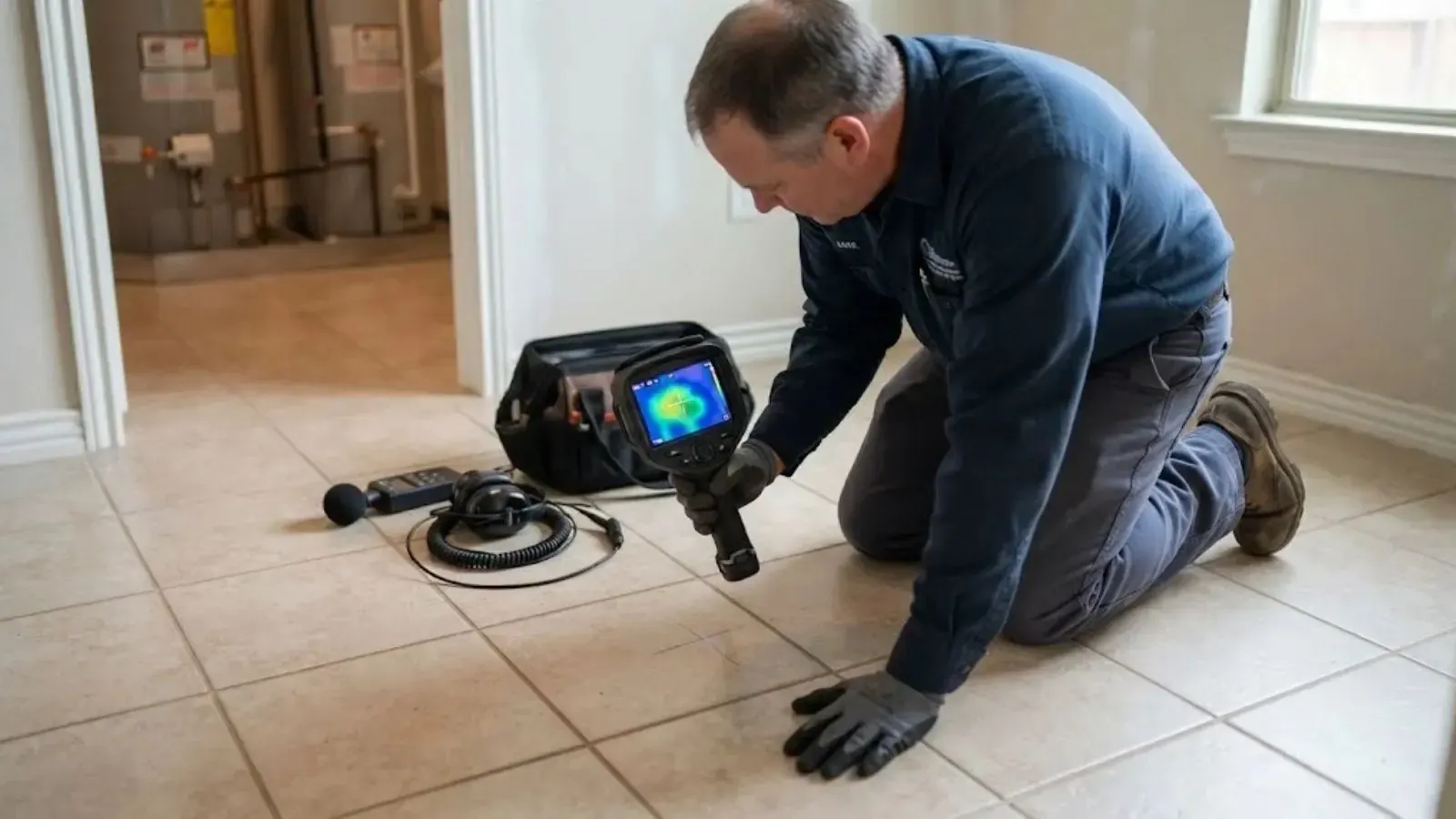
A licensed plumber uses acoustic listening gear, thermal imaging or pressure testing to pinpoint the line, so you do not pay to open walls on a guess. That is the work behind leak detection, and it is also the first step if a pipe has already failed and needs burst pipe repair.
Shut off the main if you see water spreading, turn off the water heater if the leak is on the hot side, and move rugs and furniture. If you live in Bixby or Glenpool, the same line covers Bixby and Glenpool around the clock, so you can call at night once the meter confirms what you suspected.
Questions about hidden leaks
A steady drip can waste hundreds of gallons a month, and a running toilet can waste far more. The exact amount depends on pressure and hole size, which is why the meter is the honest measure.
Yes, but not on the pressurized supply side. A drain, vent or shower pan leak does not pass through the meter, so look for stains, odors and slow drains in those areas.
Yes for flapper leaks, which are the most common toilet loss. A silent leak at the fill valve into the overflow tube needs a visual check of the water line against the overflow height.
Photograph the new register on the day it is installed and write down the reading. Run the meter test a week later so you have a clean baseline to compare against.
Usually yes. A plumber narrows it down with listening equipment, thermal imaging or a pressure test, then opens the smallest section needed.
Meter still moving with every tap closed? Call and we will send a plumber. Call (855) 575-2890